Living in Portugal on $2500 a Month: Feasible
Short answer
Yes, as long as you live outside central Lisbon. $2,500 a month covers a comfortable one-bedroom life in Porto's outer neighbourhoods, Braga, Coimbra or the Silver Coast, including rent, food and coworking. The visa is the harder part. Portugal's D8 digital nomad visa requires a higher monthly income than $2,500, so spending $2,500 and earning $2,500 lead to different answers.
Portugal has topped remote-worker wishlists for about a decade, and prices have risen with the hype. Lisbon rents that once looked cheap now rival some mid-sized German cities. The Portugal of older blog posts, where everything cost a few euros, is mostly gone. So it's fair to ask whether a single remote worker, or a frugal couple, can still live well here on $2,500 a month.
The answer is yes, with two conditions. First, you have to look beyond the famous Lisbon neighbourhoods. Second, you need to treat two questions separately: whether $2,500 covers your costs, and whether earning $2,500 gets you a residence visa. The answers are different. People who confuse them can end up with a workable budget and paperwork that doesn't qualify.
This guide covers where the money goes furthest, what a realistic monthly budget looks like, how the visa and tax rules apply to a $2,500 income, and how to make the budget feel comfortable rather than tight.
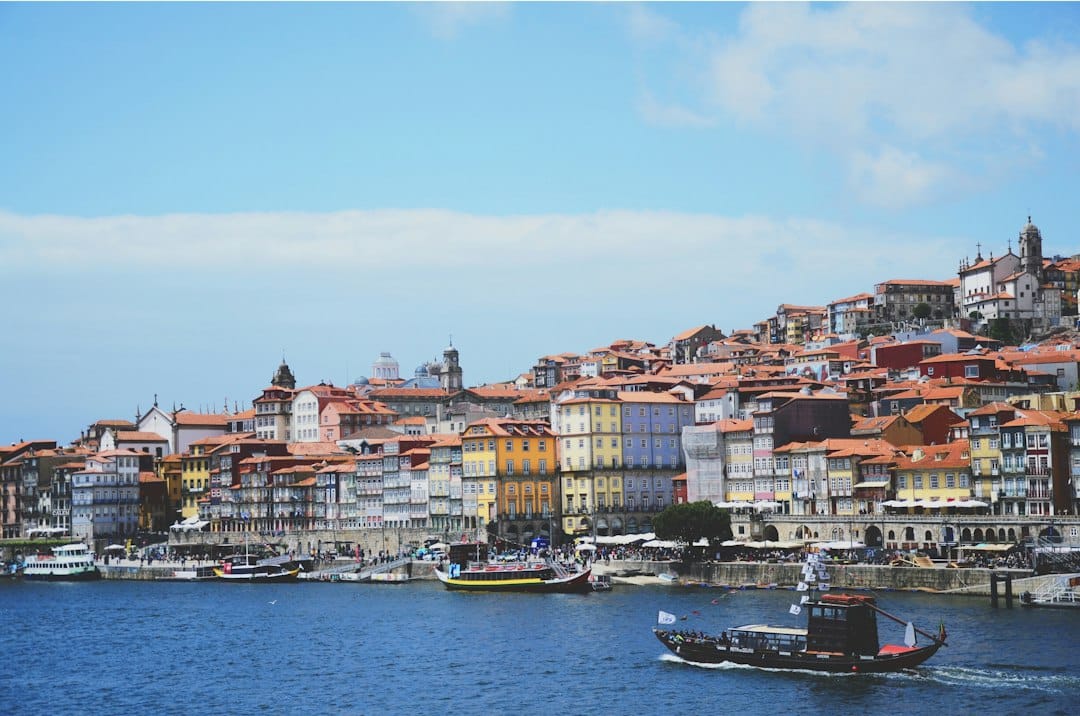
Where $2,500 Goes Furthest (and Where It Doesn't)
Where $2,500 Goes Furthest (and Where It Doesn't)
Where a $2,500 monthly budget stretches furthest across five Portuguese cities, by rent level and coworking.
| City | Typical One-Bedroom Rent | Monthly Coworking | Budget Comfort |
|---|---|---|---|
| Lisbon (central) | Highest in the country | Similar everywhere | Very tight |
| Porto | High, below Lisbon | Similar everywhere | Workable with care |
| Braga | Moderate | Similar everywhere | Comfortable |
| Coimbra | Moderate | Similar everywhere | Comfortable |
| Silver Coast | Moderate | Cheaper, fewer spaces | Generous |
Illustrative figures — composed for shape, not sourced
Start with Lisbon, since that's where most people look first. For a fuller picture of costs there, see what counts as a decent salary in Lisbon. A central one-bedroom in Príncipe Real, Chiado, Santos or Estrela typically costs €1,200–1,600 a month on a medium-term lease, and furnished places on rental platforms often cost more. Depending on the exchange rate, $2,500 is roughly €2,200–2,350, so central Lisbon leaves very little for anything else. Almada across the river, Amadora, or the towns along the Sintra line are cheaper, but you lose much of what drew you to Lisbon. Lisbon on $2,500 is possible but tight, and it isn't the best first base at this budget.
Porto is the best fit for most people on this budget. In Bonfim, Paranhos and the edges of Campanhã, a decent one-bedroom usually runs €850–1,100. You still get a proper city, a good coworking scene, an airport with useful European connections, and a food culture that rewards curiosity. Cedofeita and the Baixa cost more, but they're good to explore on weekends from a cheaper base a few metro stops away.
Braga and Coimbra are where $2,500 starts to feel generous. One-bedroom rents are typically €600–850. Braga is young, fast-growing and has a developing tech scene. Coimbra is a hilly university town with a smaller nomad community. On the Silver Coast, towns like Caldas da Rainha and Peniche, plus Nazaré outside summer, offer surf, quiet and lower rents, though a car helps. The Algarve has bargains in shoulder season, but in July and August Lagos and Albufeira get too expensive for this budget. Treat all these rents as ballpark figures and check current listings before you commit.
A Realistic Monthly Budget, Line by Line
A Realistic Monthly Budget, Line by Line
Rent is the biggest cost, so sharing it makes the budget work better for couples.
Illustrative figures — composed for shape, not sourced
Here's a rough budget for one person in Porto or Braga. Rent is about €900 in Porto or €700 in Braga. Utilities run €80–150, and winter matters here: many Portuguese homes are poorly insulated, so a cheap February flat can be cold and damp unless you budget for heating and a dehumidifier. Add €35–50 for a mobile plan and home fibre, €250–350 for groceries, and €150–250 for eating out. Set lunch menus are still often around €10–14. A monthly transit pass is around €40, a coworking membership €120–200, private health insurance €50–100, and leisure and travel about €150. That comes to roughly €1,900–2,200 in Porto, which leaves a thin buffer. In Braga, the buffer is a few hundred euros bigger.
The cost people most often underestimate is the premium on short-term rentals. Furnished one-to-three-month stays on the big platforms often cost 30–50% more than local long-term leases. One common approach is to book the first month online, then use that time to view flats in person and negotiate something longer through Idealista or a local agency. Our guide to finding affordable 1–3 month rentals across Europe covers how to find the gaps in that market.
For couples, the budget works better than you might expect, because rent is the biggest single cost and you share it. Two people on $2,500 can live comfortably in Braga or Coimbra and manage in Porto if they cook most meals at home. Small families can make it work in smaller towns and on the Silver Coast, but school costs and the need for a second bedroom make the cities difficult at this budget.
Enjoying this? Get more like it.
Weekly picks for remote workers and digital nomads — tools, destinations, and honest takes, straight to your inbox.
Subscribe free →The Visa Catch: Living on $2,500 vs Earning $2,500
This is the part that surprises people. As of October 2026, Portugal's D8 digital nomad visa requires a minimum monthly income of €3,680 (4 × the €920 minimum wage), according to Portugal's official consular visa portal. That income is measured as your average monthly income over the last 3 months. $2,500 is well below that threshold. Spending $2,500 a month in Portugal is realistic, but earning only $2,500 won't qualify you for the D8.
The Visa Catch: Living on $2,500 vs Earning $2,500
Spending $2,500 is realistic; earning only $2,500 won't get you the D8.
Illustrative figures — composed for shape, not sourced
What this means depends on your situation. If you earn comfortably above the threshold and choose to spend $2,500, you're in the best position: the D8 application is straightforward and the difference becomes savings. If your income really is around $2,500 and you hold a non-EU passport, the D8 isn't available to you for now. Your realistic options are short Schengen stays within the 90-days-in-180 rule, or another Portuguese visa category whose requirements you check directly on the official portal. EU and EEA citizens can skip the visa question entirely and register their residence locally.
Freelancers should pay attention to the three-month average. Two strong months and one weak one can pull your average below the line, so plan your invoicing in the run-up to applying. Have consistent bank statements and contracts or client letters ready before you book the consular appointment. The process is much easier with clean, steady income than with a pile of explanations.
Taxes: What IFICI Means for Your Take-Home
Once you become tax resident, which generally happens after spending more than half the year in the country, Portugal taxes your income. The old NHR regime, the reason many nomads first looked at Portugal, has been replaced by IFICI. As of October 2026, according to Portugal's tax authority, IFICI taxes eligible Portuguese-source employment and self-employment income at a special 20% rate. Foreign income is generally exempt, but foreign income paid by entities in clearly more favourable tax jurisdictions is taxed at 35%.
The key word is 'eligible'. IFICI isn't automatic: it applies to qualifying activities, and you have to register for it. If you don't qualify, Portugal's standard progressive rates apply, and social security contributions come on top for the self-employed. A local accountant (contabilista) is worth paying for from your first year. Many freelancers pay something in the region of €50–100 a month for routine filings, and that money buys a lot of peace of mind.
This matters for the $2,500 question because your budget has to come from income after tax. A gross income comfortably above the D8 line can shrink a lot once tax and contributions are paid. Do the calculation on after-tax income, keep a separate account for tax payments, and treat the $2,500 as what you spend, not what you earn.
Making the Lifestyle Work: Coworking, Food and Community
Portuguese café culture is about a quick espresso at the counter, not three hours on a laptop. Working all day from cafés soon feels awkward, and the wifi is unreliable. That makes a coworking membership better value than it first appears. Porto has a wide range of spaces, with day passes typically €10–15 and monthly memberships €120–200, while Braga's scene is smaller but friendly. For your first month, a co-living space can solve housing, workspace and social life at once. Our roundup of affordable co-living spaces for digital nomads is a good place to start comparing.
Making the Lifestyle Work: Coworking, Food and Community
Café culture isn't built for laptop days, so a coworking membership earns its cost.
Illustrative figures — composed for shape, not sourced
Food is where Portugal still offers great value. Shop at the markets, such as the renovated Mercado do Bolhão in Porto or Braga's municipal market. Use Pingo Doce, Continente and Lidl for staples, and make the prato do dia your default weekday lunch. Two things are worth spending more on: an apartment with proper heating or a heat-pump air conditioner, because a cold winter will ruin a budget that looks fine on paper, and the occasional weekend train to Lisbon for a big dinner out. Skip the Algarve in peak summer at this budget. September is better value and much nicer.
Meeting people costs almost nothing if you put in the effort. Porto and Lisbon both have regular nomad meetups, language exchanges and running clubs. Learning even basic European Portuguese, rather than Brazilian Portuguese or Spanish, gets a warmer welcome from neighbours and market vendors. If you're still deciding between Portugal and somewhere cheaper, our guide to slow travel cities on a budget shows how Porto and Braga compare with other options.
So, can you live in Portugal on $2,500 a month? On cost alone, yes. Porto works with some care, and Braga, Coimbra and the Silver Coast leave real room to enjoy yourself. Central Lisbon is the main exception, and it will squeeze this budget hard. For a cheaper comparison on a similar budget, see what living on $2,000 a month in Colombia really costs. Rent is the cost that decides everything else, so put most of your planning effort there.
The bigger hurdle is residency, not cost of living. If you're a non-EU remote worker, the plan that works best is to earn above the D8 threshold, spend around $2,500, and save the rest. Get the visa and tax setup right first, choose a city that suits your budget, and Portugal on $2,500 a month can still be a comfortable way to live.
FAQ
what is the D8 digital nomad visa income requirement for Portugal
As of October 2026, Portugal's D8 digital nomad visa requires a minimum monthly income of €3,680, which is 4 times the €920 minimum wage. This income is measured as your average monthly income over the last 3 months, so $2,500 is below the threshold needed to qualify.
how much does rent cost in Porto Portugal
In Porto neighborhoods like Bonfim, Paranhos and the edges of Campanhã, a decent one-bedroom typically runs €850–1,100 per month. More central areas like Cedofeita and the Baixa cost more, but you can find cheaper accommodation a few metro stops away.
what is IFICI tax in Portugal
IFICI is Portugal's special tax regime that taxes eligible Portuguese-source employment and self-employment income at a 20% rate. Foreign income is generally exempt, but foreign income paid by entities in clearly more favourable tax jurisdictions is taxed at 35%. You must register for it, as it's not automatic.
where in Portugal is cheapest to live on $2500
Braga and Coimbra offer the best value at this budget, with one-bedroom rents typically €600–850, making $2,500 feel generous. Towns on the Silver Coast like Caldas da Rainha and Peniche also offer lower rents, though a car helps in those areas.
Sources
Illustrative, composed for shape rather than sourced: Where $2,500 Goes Furthest (and Where It Doesn't). Updated 3 Nov 2026.