What to Pack for 10 Days in Portugal
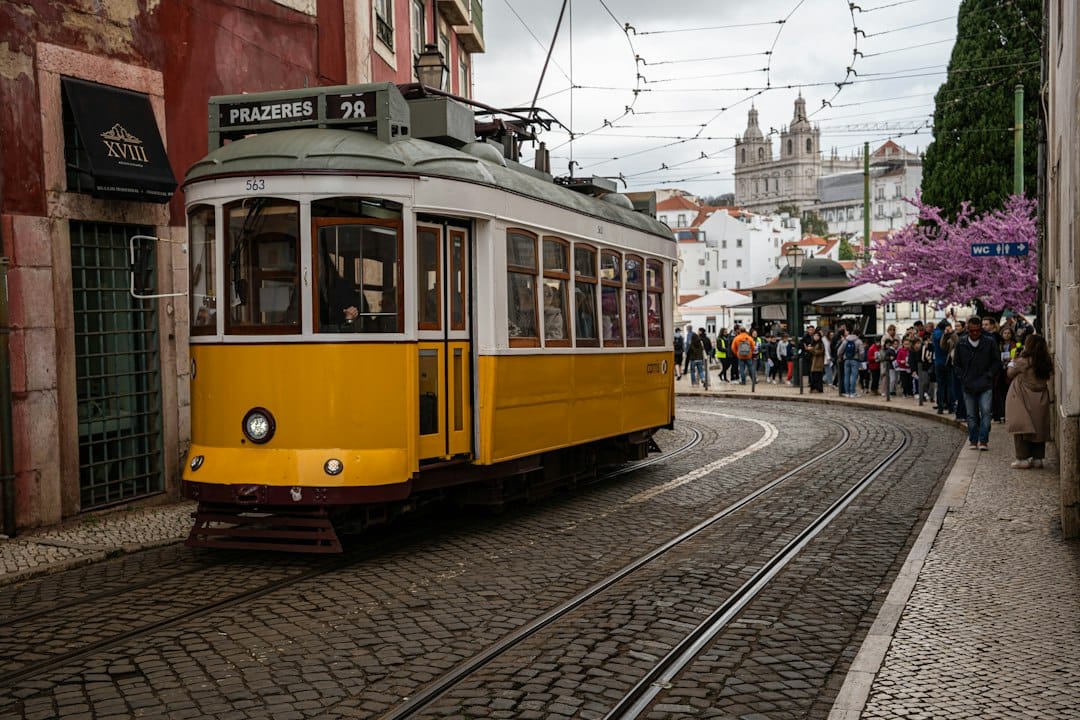
Portugal has a way of fooling packers. You see the postcards (yellow trams, terracotta rooftops, golden Algarve cliffs) and pack as if you're headed somewhere tropical. Then you land in Lisbon in April, the wind off the Tagus has real bite, and the polished limestone pavement under your brand-new sandals behaves like an ice rink after a light drizzle. Portugal is warm, sunny and gloriously walkable, but it is also Atlantic, hilly and more changeable than its reputation suggests.
Ten days is the sweet spot for a Portugal trip. It's long enough to split between two or three bases, say Lisbon, Porto and a few days on the coast, and to fit in some proper laptop time if you're working remotely. It's also short enough that there is no good excuse for checking a bag. Pack well and you'll glide between trains, trams and budget flights. Pack badly and you'll spend your trip hauling a suitcase up a 20-degree cobbled incline in Alfama, wondering why you brought three pairs of heels.
This guide covers what the weather actually does region by region, why carry-on only is the right call, a realistic 10-day clothing list, the remote work kit that makes Portuguese cafés and apartments workable, and the packing mistakes that catch out first-timers every single season.
First, Understand the Portugal You're Actually Packing For
First, Understand the Portugal You're Actually Packing For
Regional climate character, footwear demands and the essential packing item for Lisbon, Porto and the Algarve.
| Region | Lisbon | Porto | Algarve |
|---|---|---|---|
| Climate character | Mild, windy, cool evenings | Atlantic, frequent rain, damp chill | Hottest, driest, cold water |
| Footwear priority | Grippy sole for slick limestone | Waterproof with grippy sole | Sturdy shoes plus water-resistant option |
| Key packing item | Lightweight waterproof jacket | Genuine waterproof shell | Sunglasses and hat |
| Indoor heating | Can be cold in winter | Often limited | Rarely needed |
Illustrative figures — composed for shape, not sourced
Portugal is a small country, but it doesn't pack as one destination. Porto and the north are Atlantic through and through: greener for a reason, with frequent rain from autumn through spring and a damp chill that cuts through cotton. If Porto is on your itinerary between October and April, a genuinely waterproof shell is non-negotiable. Lisbon is milder and sunnier, but it's windy, and evenings cool down quickly even when the afternoon felt like summer. The Algarve is the hottest and driest of the three, built for beach days, though the Atlantic water stays bracingly cold for much of the year. Check the forecast for every base you're visiting, not just the first one.
The practical takeaway is layers, not outfits. Day-to-night temperature swings are significant in spring and autumn, and in winter there's an extra trap: many older Portuguese apartments have little or no central heating. It can genuinely feel colder inside a stone-walled Lisbon flat in January than it does on a sunny street outside. A warm mid-layer and a pair of wool socks for indoor use will do more for your comfort than any number of cute jackets.
Then there's the terrain. Lisbon is famously built on seven hills, and Porto is arguably steeper. Both cities are paved with calçada portuguesa, the beautiful hand-laid limestone mosaics that turn slick with wear and treacherous in rain. Your footwear choice is the single most important packing decision you'll make for this trip, and it should drive everything else. If you're still deciding where to base yourself, the breakdown of the best places in Portugal for digital nomads will help you match your packing list to the right climate.
Why Carry-On Only Is the Right Call for 10 Days
Checked suitcase vs carry-on only in Portugal
What changes in Portugal when you travel with a carry-on instead of a checked suitcase.
BeforeHauling a big case over slick calçada cobbles
AfterA backpack or soft carry-on you can carry over them
BeforeSeveral flights of stairs in a historic apartment with no lift
AfterA bag you can lift up in one go
BeforeWaiting at baggage reclaim before the airport metro
AfterStraight from the plane to the train or metro
BeforeSurprise size limits and fees on budget airlines
AfterPacked to the strictest limit, so every airline is covered
IllustrativeA comparison in words. No figures shown.
Ten days fits comfortably into a carry-on if you're willing to do one load of laundry halfway through. And in Portugal, the case for travelling light is stronger than almost anywhere in Europe. The Lisbon metro runs straight from the airport into the city, trains between Lisbon and Porto are fast and easy, and many apartments in the historic centres are up several flights of narrow stairs with no lift. Dragging a large checked case over cobblestones is loud, slow and miserable; if you do bring wheels, it's worth understanding the trade-offs between spinner wheels and two-wheel luggage, because sturdy two-wheelers handle calçada far better than four small spinners.
Size limits matter, especially if your trip includes a budget hop to or from Lisbon, Porto or Faro. Carry-on size limits vary by airline, and they are usually quoted in linear inches, which simply means length plus width plus height. In general, the tightest limits belong to the budget carriers you're most likely to use for intra-European legs. Check your airline's current limit before you fly, then pack to the strictest one on your itinerary and you're covered on every leg. Budget carriers also often split their allowance into a small free personal item and a larger cabin bag that costs extra, so read your fare conditions before you fly.
For the bag itself, a 35–40 litre travel backpack or a soft-sided carry-on with robust wheels and backpack straps is ideal. Use packing cubes to separate work gear, clothes and toiletries so you can unpack in two minutes at each base. Many short-term rentals in Portugal have a washing machine, but tumble dryers are rarer; clothes usually dry on a rack or a line outside the window. That makes quick-drying fabrics like merino and synthetic blends far more useful than heavy denim or thick cotton.
Fitting ten days into one carry-on
The order this guide suggests, not a measured schedule.
- Check every airline's limit
The tightest usually belong to the budget carriers on intra-European legs
- Pack to the strictest one
Then you're covered on every leg
- Read your fare conditions
A free personal item and a paid cabin bag are often separate
- Sort into packing cubes
Work gear, clothes and toiletries, so you unpack fast at each base
- Do one load of laundry halfway
Quick-drying merino and synthetic blends dry on a rack
IllustrativeA summary of the steps described above, not a measured schedule.
Enjoying this? Get more like it.
Weekly picks for remote workers and digital nomads — tools, destinations, and honest takes, straight to your inbox.
Subscribe free →The 10-Day Clothing List: Built Around Layers, Not Outfits
Here's a realistic baseline for ten days with one laundry stop: five or six tops (mostly t-shirts or light blouses, plus one or two long-sleeved options), two pairs of trousers, one pair of shorts or a skirt or dress if you're travelling between May and October, one warm mid-layer such as a merino jumper or light fleece, one lightweight waterproof jacket with a hood, seven sets of underwear and socks, something to sleep in, swimwear, and one smart-casual outfit for a nicer dinner or a fado night. Stick to a neutral palette so everything mixes, and you'll have far more combinations than the item count suggests.
Shoes: two pairs, maximum. Your main pair should be a comfortable, broken-in trainer or walking shoe with a grippy rubber sole, because you'll easily walk 15,000 to 20,000 steps a day in Lisbon or Porto without trying. Your second pair depends on season: sandals with decent tread for summer, or water-resistant boots for winter in the north. Leave anything with a smooth leather sole at home. It's not a style judgement; it's a survival one. Polished calçada after rain is no place for slick soles.
The ten-day clothing list
The baseline this guide gives, with one laundry stop.
Clothes
Shoes, two pairs maximum
IllustrativeA checklist of the advice above. Ticks are not saved. No figures shown.
A note on style: Portuguese dress codes are relaxed but tidy. Locals in Lisbon and Porto rarely wear technical hiking gear to dinner, so a clean pair of trousers and a simple knit will help you blend in far better than zip-off cargo pants. A lightweight scarf is surprisingly useful too, handling wind on the miradouros, over-enthusiastic air conditioning and modest dress in churches. And a strong opinion: skip the umbrella in Lisbon. The wind will turn it inside out within a day. A good hood does the job better and takes up no space at all.
Your Remote Work Kit: Tech, Power and Connectivity
Portugal uses Type F and Type C plugs, the standard round two-pin European sockets, on 230V. Most laptop and phone chargers are dual-voltage and only need a plug adapter, but double-check anything with a heating element, like hair straighteners. Rather than carrying a fistful of separate adapters, bring one good universal adapter and a compact multi-port USB-C charger that can power your laptop, phone and headphones from a single socket. A short extension lead is gold in older apartments, where the only free socket is often hidden behind the bed.
Apartment Wi-Fi in Portugal ranges from excellent fibre to frustrating, and you won't know which you've got until you arrive. Lisbon and Porto both have plenty of coworking spaces and laptop-friendly cafés, but a reliable mobile data backup is essential if you have client calls. An eSIM sorted before you land means you can hotspot from day one; our Nomad SIM card review breaks down whether that option is worth it. Noise-cancelling headphones are worth their weight too, both for busy cafés and for the rattling tram ride home.
Your remote work kit, by how much you need it
How strongly this section recommends each item, not a measured ranking.
Optionalif you work more than a few daysUsefulworth the spaceCorebring it
- Universal adapterCore
- Multi-port USB-C chargerCore
- Mobile data backup, such as an eSIMEssential if you have client calls.Core
- Power bankAirline rules require it in your cabin bag.Core
- Short extension leadThe only free socket is often behind the bed.Useful
- Noise-cancelling headphonesUseful
- Laptop stand and Bluetooth keyboardOptional
IllustrativeSorted by judgement, not measured. No figures shown.
If you're working more than two or three days of the ten, pack a foldable laptop stand and a slim Bluetooth keyboard. Portuguese café chairs and rental-flat dining tables are charming, but they are not designed for six-hour work sessions, and your neck will tell you about it by day four. Finally, bring a power bank. All that hill-climbing with maps open drains a phone fast, and remember that airline rules require power banks to travel in your cabin bag, not in checked luggage.
Common Packing Mistakes (and What to Do Instead)
The most common mistake is packing for the postcard instead of the season. Portugal in March is not Portugal in August, and Porto in November is not the Algarve in June. Instead, check forecasts for each stop and build around layers. The second mistake is footwear: either bringing smooth-soled shoes or debuting brand-new shoes on day one. Break your walking shoes in at home. The third is the oversized suitcase. Even if your airline allows it, Portugal's stairs, hills and cobbles will make you regret it within an hour of arrival.
Mistake number four is overpacking toiletries. Pharmacies (look for the green cross of a farmácia) are everywhere, and supermarkets like Pingo Doce and Continente stock everything from sunscreen to shampoo at reasonable prices. Bring travel sizes of what you can't live without and buy the rest on arrival. The fifth mistake is assuming cards work everywhere. Card payments are widely accepted, but small tascas, market stalls and some cafés may prefer cash or set a minimum spend for cards. Carry a small float of euros for those moments.
Five packing mistakes, and what to do instead
The mistakes this guide names, and the fix it gives for each.
Packing for the postcard, not the season
CostPortugal in March is not Portugal in August.
FixCheck forecasts for each stop and build around layers.
Smooth-soled or brand-new shoes
CostPolished calçada turns slick with wear and treacherous in rain.
FixBreak your walking shoes in at home.
Bringing an oversized suitcase
CostStairs, hills and cobbles make you regret it within an hour.
FixKeep everything to a carry-on.
Overpacking toiletries
CostPharmacies and supermarkets stock everything from sunscreen to shampoo.
FixBring travel sizes and buy the rest on arrival.
Assuming cards work everywhere
CostSmall tascas, market stalls and some cafés may prefer cash.
FixCarry a small float of euros.
IllustrativeAdvice from the post above. No figures shown.
A bonus mistake for winter visitors: forgetting that indoors can be cold. If you're travelling between December and February, that warm layer and those wool socks aren't optional extras. They're what stands between you and a shivery evening on the sofa under every blanket in the flat.
Small Extras That Earn Their Place in Your Bag
Sunglasses and a packable hat are essential year-round. Portugal's sun is stronger than the breezy temperatures suggest, and the pale limestone pavements and whitewashed walls bounce glare back at you all day. Pack a reusable water bottle too. Tap water is generally safe to drink across the country, and you'll get through plenty of it climbing hills in the heat. A foldable tote bag is another quiet winner: shops charge for plastic bags, and you'll want something for market runs and bakery hauls of pastéis de nata.
Earplugs deserve a special mention. If you're staying anywhere near Bairro Alto or Cais do Sodré in Lisbon, or the Ribeira in Porto, the streets stay lively well past midnight, especially on weekends. Old buildings with single-glazed windows don't do much to soften it. A cheap pair of foam earplugs and a sleep mask can be the difference between a productive work morning and a groggy one.
Small extras, and what each one is for
The extras this guide rates, grouped by the job they do.
Sunglasses and a packable hat
ForGlare bounces off pale limestone pavements and whitewashed walls all day.
A reusable water bottle
ForTap water is generally safe to drink across the country.
A foldable tote bag
ForShops charge for plastic bags, and you'll want one for markets.
Earplugs and a sleep mask
ForLively streets and single-glazed windows can cost you a work morning.
A small packable daypack
ForCarries your laptop, a jacket and water while your main bag stays put.
IllustrativeThe post's own grouping, not an official classification. No figures shown.
Finally, a small packable daypack is worth the space. Your main bag stays at the apartment while you carry your laptop to a coworking space, a jacket for the evening and a bottle of water for the day. Choose one that's comfortable when loaded with a laptop and has a zip you can keep against your body on crowded trams, where pickpockets do operate on the busiest tourist routes.
Packing for ten days in Portugal comes down to a few honest truths: the weather is more varied than the postcards suggest, the streets are steeper and slipperier than you expect, and the lighter you travel, the more of the country you'll actually enjoy. Get your shoes right, build your wardrobe around layers, keep everything to a carry-on that fits the strictest airline limit on your route, and bring a work kit that can cope with a dodgy socket and patchy Wi-Fi.
Do that, and the logistics fade into the background. You'll be free to focus on what Portugal does best: long lunches, golden-hour viewpoints, ocean air and that rare feeling of a place where working remotely feels less like work and more like living well.
FAQ
what shoes should I pack for Portugal
Pack two pairs maximum: a comfortable, broken-in trainer or walking shoe with a grippy rubber sole as your main pair for the 15,000 to 20,000 steps you'll easily walk daily, and a second pair depending on season (sandals with decent tread for summer, or water-resistant boots for winter in the north). Avoid anything with a smooth leather sole, as polished calçada limestone pavement becomes treacherous in rain.
do I need to check a bag for 10 days in Portugal
No, ten days fits comfortably into a carry-on if you're willing to do one load of laundry halfway through. Travelling light is especially practical in Portugal because many apartments in historic centres are up narrow stairs with no lift, and dragging a large checked case over cobblestones is loud, slow and miserable.
what type of plug adapter do I need in Portugal
Portugal uses Type F and Type C plugs, the standard round two-pin European sockets on 230V. Most laptop and phone chargers are dual-voltage and only need a plug adapter, though you should double-check anything with a heating element like hair straighteners.
is it cold indoors in Portugal
Yes, many older Portuguese apartments have little or no central heating and can feel genuinely colder inside a stone-walled flat than on a sunny street outside, especially between December and February. A warm mid-layer and wool socks for indoor use are essential for winter visitors.
Sources
Illustrative, composed for shape rather than sourced: Why Carry-On Only Is the Right Call for 10 Days; First, Understand the Portugal You're Actually Packing For. Updated 10 Oct 2026.