Healthiest Foods to Eat While Traveling
Short answer
The healthiest foods to eat while traveling keep well and fill you up: nuts, oats, whole fruit like apples and bananas, yogurt, eggs, tinned fish, legumes and fresh local vegetables. Prioritize protein, fiber and water, buy from local markets where you can, and carry a few portable snacks for long transit days.
The first morning in a new city has its own rhythm. You wake before the alarm, light falls at an unfamiliar angle across the shutters, and a scooter coughs into life somewhere below. Your stomach is still set to another time zone and can't decide whether it wants breakfast or dinner. By noon you've had two coffees and a pastry eaten standing up, and your body feels like it is running on borrowed fuel.
Eating well on the road depends less on discipline than on design. When you work remotely and move between places, a lot shapes your meals that you can't fully control: flight schedules, rooms without kitchens, menus in a script you can't read, and the pull of whatever is closest to the coworking space. The travelers who feel best over months of movement usually rely on a small set of foods that are portable, filling and easy to find almost anywhere. Then they let the local cuisine fill in the rest.
This guide covers those foods. It explains what to carry, what to look for in transit, how to shop a market you've never seen before, and how to build a simple routine when you settle somewhere for a few weeks.
ℹ️ This content is for informational purposes only and does not constitute medical or insurance advice. Consult a licensed professional for your specific situation. Full disclaimer →
What Your Body Needs When Routine Disappears
Travel strips away the structure that holds everyday eating together. At home you have a fridge you know by heart, a grocery store with predictable aisles, and meal times set by your work schedule. On the road, all three can disappear in a single day. Long hours of sitting, dry cabin air, irregular sleep and time-zone shifts all push your appetite and digestion off balance. That is why so many people feel sluggish, bloated or constantly peckish by the third day of a trip.
The simplest response is to focus on three things instead of a list of rules: protein, fiber and water. Protein from eggs, yogurt, legumes, fish and nuts keeps you full for longer and smooths out the energy dips that make a vending machine look tempting. Fiber from whole fruit, vegetables, oats and beans supports digestion, which often slows down while traveling. Water is easy to forget when you're moving between planes and cafés, but it affects how hungry, tired and foggy you feel.
None of this requires counting anything. Think of it as a short checklist you run through when you look at a menu or a market stall. Will this hold me until the next meal? Is there a vegetable on this plate? Have I had a glass of water since the airport? Ask those questions often enough and the healthier choice becomes your default. Food is also only one part of feeling well while moving. If constant travel is wearing you down, our guide to managing digital nomad burnout covers sleep, rest and boundaries as well.
Foods That Travel Well: Building a Portable Pantry
Foods That Travel Well: Building a Portable Pantry
Core portable foods compared on protein content, shelf life without refrigeration, and refrigeration requirements.
| Food | Protein-Rich | Shelf Life | No Refrigeration Needed |
|---|---|---|---|
| Nuts (almonds, cashews, walnuts) | Yes | Weeks | Yes |
| Rolled oats | Moderate | Weeks | Yes |
| Fresh fruit (apples, bananas, oranges) | Low | Days | Yes |
| Tinned fish (sardines, mackerel, tuna) | Yes | Weeks | Yes |
| Hard cheese (cheddar, parmesan, manchego) | Yes | Days | Yes |
| Hard-boiled eggs | Yes | One day | Requires refrigeration |
| Nut butter sachets | Yes | Days | Yes |
Illustrative figures — composed for shape, not sourced
Experienced travelers come back again and again to a plain category of food: things that survive the bottom of a backpack. Raw almonds, cashews and walnuts are the obvious place to start. They are rich in protein and healthy fats, keep for weeks without refrigeration, and are sold in markets from Lisbon to Chiang Mai. Rolled oats in a zip bag become breakfast anywhere you can get hot water, whether from a hotel kettle or the urn in a hostel kitchen. Apples, bananas, oranges and mandarins come in their own packaging and last for days without a fridge.
For protein that doesn't need refrigeration, try tinned fish such as sardines, mackerel or tuna in olive oil. It is a staple in Portugal, Spain and much of Southeast Asia, and with crackers or bread it makes an easy park-bench lunch. Unsweetened jerky or dried meat, hard cheeses like aged cheddar, parmesan or manchego, and roasted chickpeas all hold up for a day or two without cold storage. Small sachets of nut butter are worth the space, because they turn a plain roll or a banana into something that will last until dinner. Hard-boiled eggs are also excellent, but they need refrigeration and are best eaten within a day.
Be careful with packaged snacks that look healthy. Many protein bars and granola mixes are closer to dessert than they appear, with sugar near the top of the ingredient list. Reading labels in an unfamiliar language is tiring, so it helps to stick to foods that are clearly themselves: a nut is a nut, and an apple is an apple. Keep a small stash in your day bag and you won't have to rely on whatever the nearest kiosk sells. Some countries also restrict bringing fresh produce, meat or dairy across their borders, so finish or throw away perishables before you land and check the rules for your destination.
Enjoying this? Get more like it.
Weekly picks for remote workers and digital nomads — tools, destinations, and honest takes, straight to your inbox.
Subscribe free →Eating Well in Airports, on Trains and on Long Travel Days
Eating Well in Airports, on Trains and on Long Travel Days
Treat a transit day as a series of small refuels instead of waiting for one proper meal.
Illustrative figures — composed for shape, not sourced
Transit days are where good intentions tend to fall apart. Picture a 6am departure, a layover where the only open counter sells fried food, and an inflight meal served at what your body thinks is three in the morning. The fix is to treat the day as a series of small refuels instead of waiting for one proper meal. Eat a real breakfast before you leave, ideally eggs, oats, yogurt and fruit. Then carry enough from your portable pantry to cover at least one long gap.
Airport food has improved a lot, and most major hubs now have at least one place selling salads, grain bowls, sushi, fruit cups or plain Greek yogurt. Lounge access can help too. If you have it, check what food is included in Priority Pass lounges before you count on it. On long train journeys, especially in Europe and Asia, station shops and platform vendors often sell rice balls, wholegrain sandwiches, boiled eggs and fruit. These are usually far better travel food than anything on the snack trolley.
On the flight itself, keep things simple. Cabin air is dry, so drink water steadily throughout. Go easy on salty snacks and alcohol, since both can leave you more dehydrated and puffy when you land. Many travelers find that eating lightly in the air and having a proper meal at the destination helps them adjust to the new time zone faster. For more on preparing well, read what not to do before a long-haul flight.
The Healthiest Meal Is Often the Local One
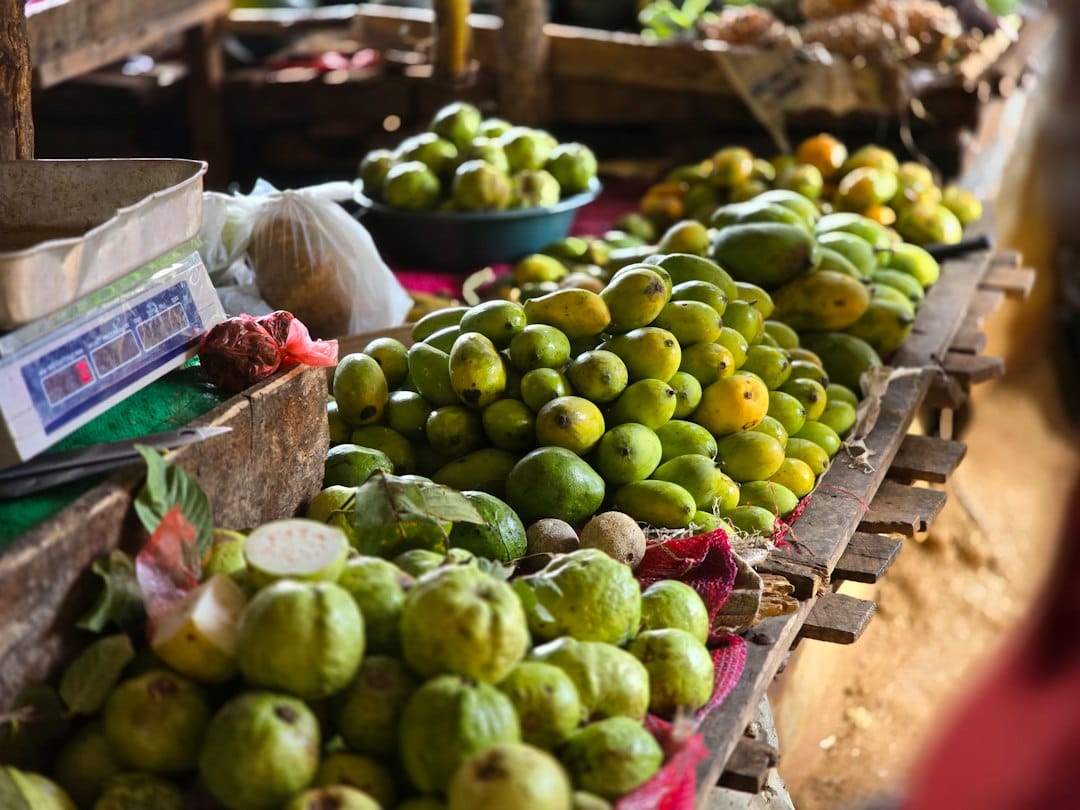
Many people assume that eating well abroad means tracking down familiar food, such as a smoothie bowl in Bali or avocado toast in Mexico City. In reality, many of the world's everyday cuisines are built on exactly what nutritionists recommend: vegetables, legumes, whole grains, fermented foods and modest portions of meat or fish. Walk into almost any neighborhood market at seven in the morning and you'll see the healthiest food in the city being bought by the people who live there.
The Healthiest Meal Is Often the Local One
Where tap water isn't safe to drink, lean towards food that is cooked or that you peel yourself.
Illustrative figures — composed for shape, not sourced
In Vietnam, a bowl of pho or bun cha comes piled with fresh herbs, greens and lime, and street vendors sell sliced fruit by the bag. In Mexico, a market comedor serves beans, grilled meat, corn tortillas and salsas made from fresh chilies and tomatoes, while the fruit stall next door cuts papaya and mango to order. Around the Mediterranean, from Greek tavernas to the tascas of Lisbon, lunch often means grilled fish, olive oil, salads and bread. In Japan, even a convenience store sells onigiri, miso soup, edamame and boiled eggs. In Georgia, bean stews like lobio sit beside walnut-and-vegetable pkhali on almost every table. In India, dal, rice, vegetables and yogurt make a balanced plate on their own.
To find these meals, follow the locals instead of the laminated picture menus. Look for busy stalls with high turnover, which usually means fresher food, and choose dishes that are cooked and served hot. Where tap water isn't safe to drink, be careful with raw salads that may have been washed in it and with fruit you haven't peeled yourself. Choosing cooked vegetables and fruit you peel yourself lets you enjoy local produce with less risk of an upset stomach. Learning a few words in the local language, such as vegetables, beans, grilled and no sugar, will help your diet more than any app.
Building a Healthy Routine When You Stay for a Month
Building a Healthy Routine When You Stay for a Month
A starter list that covers breakfasts, soups and grain-and-bean bowls for most of the week.
Illustrative figures — composed for shape, not sourced
Slow travel makes healthy eating much easier. Once you're staying somewhere for a few weeks, you can build a small, repeatable routine that carries you through busy work weeks. Choose a rental or co-living room with even a basic kitchen: two burners, a fridge and a pan. That alone makes cheap, healthy meals possible in a way that eating out every day can't match. It also gives your digestion some consistency, which it usually welcomes after the disruption of moving.
The first grocery run sets you up for the rest of your stay. A good starter list includes oats, eggs, plain yogurt, seasonal fruit, a few sturdy vegetables like carrots, cabbage, onions and peppers, a bag of lentils or a few tins of beans, a jar of nuts and a bottle of olive oil. With just those, you can make breakfasts, simple soups, eggs with vegetables, and grain-and-bean bowls for most of the week. Then you can save eating out for the meals you really want to enjoy. Buying seasonal local produce keeps costs down, and it means your food tastes of where you are.
Regular habits matter as much as the ingredients. Many remote workers find it helps to start each day with the same breakfast, keep a fruit bowl and a jar of nuts on the desk, and cook a pot of soup or beans on Sunday so weekday lunches don't depend on willpower after a long call. Fill a large water bottle in the morning and keep it within reach. These habits are less exciting than a food tour, but they are what let you enjoy the food tours without feeling drained.
Building a Healthy Routine When You Stay for a Month
Cook a pot of soup or beans on Sunday so weekday lunches don't depend on willpower.
Illustrative figures — composed for shape, not sourced
Eating well while traveling doesn't require a strict plan. It comes down to a handful of reliable foods, a few good habits on transit days, and the curiosity to eat the way locals do. Keep nuts in your bag, oats in a zip bag, fruit you can peel and a tin of sardines for emergencies, and have a market breakfast whenever you can. That covers most of it.
The rest is what makes travel worth it: a warm tortilla handed across a market counter, herbs you can't name piled onto a bowl of noodles, olive oil so green it tastes of cut grass. Eat well enough to feel good, and you'll have the energy to say yes to all of it.
FAQ
what foods should I pack when traveling
Pack raw nuts like almonds, cashews and walnuts, rolled oats in a zip bag, fresh fruit like apples and bananas, tinned fish such as sardines or mackerel, hard cheeses, roasted chickpeas, and small sachets of nut butter. These foods survive without refrigeration for days or weeks and are available in markets worldwide.
how to eat healthy on long flights and train journeys
Eat a real breakfast before you leave, carry portable pantry items to cover long gaps, and drink water steadily throughout your journey. At airports, look for salads, grain bowls, sushi, fruit cups or Greek yogurt, and on trains choose rice balls, wholegrain sandwiches, boiled eggs and fruit from station shops rather than snack trolleys.
what should I focus on when eating while traveling
Focus on three things: protein from eggs, yogurt, legumes, fish and nuts to keep you full longer; fiber from whole fruit, vegetables, oats and beans to support digestion; and water, which is easy to forget but affects how hungry, tired and foggy you feel.
how to set up healthy eating for a month-long stay
Choose accommodation with at least a basic kitchen, then buy oats, eggs, plain yogurt, seasonal fruit, sturdy vegetables, lentils or tinned beans, nuts and olive oil. Establish regular habits like eating the same breakfast daily, keeping a fruit bowl and nuts at your desk, and cooking a batch of soup or beans on Sunday for weekday lunches.
Sources
Illustrative, composed for shape rather than sourced: Eating Well in Airports, on Trains and on Long Travel Days; Building a Healthy Routine When You Stay for a Month; Foods That Travel Well: Building a Portable Pantry. Updated 3 Nov 2026.