How Much Money You Need to Live in Tbilisi
Short answer
Most remote workers need roughly $1,200 to $2,000 a month in Tbilisi. A lean setup in Saburtalo can come in close to $1,000. A stylish one-bedroom in Vake or Vera, regular dinners out and a coworking membership push you toward $2,000 to $2,500. Rent is the big variable. Food, wine and transport stay refreshingly cheap.
Tbilisi has a reputation as the city where your money stretches absurdly far. You get a bottle of decent Saperavi for the price of a London pint, khinkali dinners for a few dollars, and a long visa-free stay for many passports. That reputation is mostly earned, but it is also a few years out of date. Since 2022, a wave of new arrivals has pushed rents up sharply in the neighbourhoods remote workers actually want to live in. The Tbilisi of cheap everything has become the Tbilisi of cheap everything except your apartment.
So this guide does not just give you one tidy number. It breaks down where the money goes, which neighbourhoods are worth the premium, what daily life really costs, and which mistakes quietly drain newcomers' budgets in their first month. All figures are approximate and shift with the lari exchange rate, which has hovered around 2.6 to 2.8 GEL to the US dollar in recent years. Check the current rate before you plan to the dollar.
If you are still choosing between Tbilisi and other affordable bases, it is worth comparing it against our roundup of slow travel cities for digital nomads on a budget. Tbilisi holds its own, but it is no longer the automatic bargain it once was.
The Short Version: Three Monthly Budgets for Tbilisi
A lean month runs around $1,000 to $1,300. That means a modest one-bedroom or a nice studio in Saburtalo, Didube or a less polished corner of Chughureti. You cook most meals, eat out a few times a week at local places, ride the metro and buses, and work from home or cafes. It is very livable. Tbilisi's local food is good enough that budget living rarely feels like deprivation. You will just be signing a lease in a Soviet-era block rather than a renovated Vera apartment with a balcony and a view.
A comfortable month, which is where most remote workers land, sits around $1,500 to $2,000. That gets you a renovated one-bedroom in Vake, Vera or Sololaki. It covers a coworking membership, Bolt rides whenever you cannot be bothered with the metro, dinners out several nights a week and the occasional weekend trip to Kazbegi or Kakheti. This is the sweet spot. You get the walkable, leafy, cafe-lined Tbilisi people fall in love with, without counting every lari.
A splurge month starts at $2,500 and climbs from there. Think a two-bedroom with a terrace in upper Vake, a private office, regular nights at the city's better restaurants and natural wine bars, a gym membership, and frequent trips out of town. Couples and small families should add roughly 50 to 70 percent to the solo figures. Rent does not double, but food, transport and activities nearly do. One honest note: if you need a big, quiet, well-insulated apartment in a prime area, budget generously. Those places are in short supply and landlords know it.
What a comfortable month costs, line by line
Low and high monthly costs this guide gives for one person in a renovated Vake or Vera flat. Eating out, Bolt rides and trips come on top.
LowHigh
- Rent, Vake or Vera600 → 1000 USD+400
- Groceries200 → 300 USD+100
- Coworking hot desk100 → 200 USD+100
- Utilities, summer40 → 80 USD+40
- Transport30 → 60 USD+30
ArithmeticBoth values in each row are quoted from the post, and the gap is their difference. The scale starts at zero.
Rent: Where Most of Your Money Goes
Rent: Where Most of Your Money Goes
Tbilisi neighbourhoods compared by typical one-bedroom rent, character, walkability and best-suited residents.
| Neighbourhood | Monthly Rent | Character | Best For |
|---|---|---|---|
| Vake | $600–$1,000 | Green, walkable, cafes | Nomads wanting leafy charm |
| Vera | $600–$1,000 | Leafy, quiet, specialist coffee | Remote workers prioritising calm |
| Sololaki | $600–$1,000 | Historic, steep, variable quality | Atmosphere seekers with flexibility |
| Saburtalo | $300–$700 | Modern, transit-friendly, plain | Budget-conscious, metro-reliant |
| Chughureti | $450–$850 | Creative, younger, mixed vibe | Social nomads seeking middle ground |
| Old Town core | $600–$1,000 | Tourist-heavy, beautiful, noisy | Short trips only, not long stays |
Source: georgiaexpats.com, retrieved 2026-10-06.
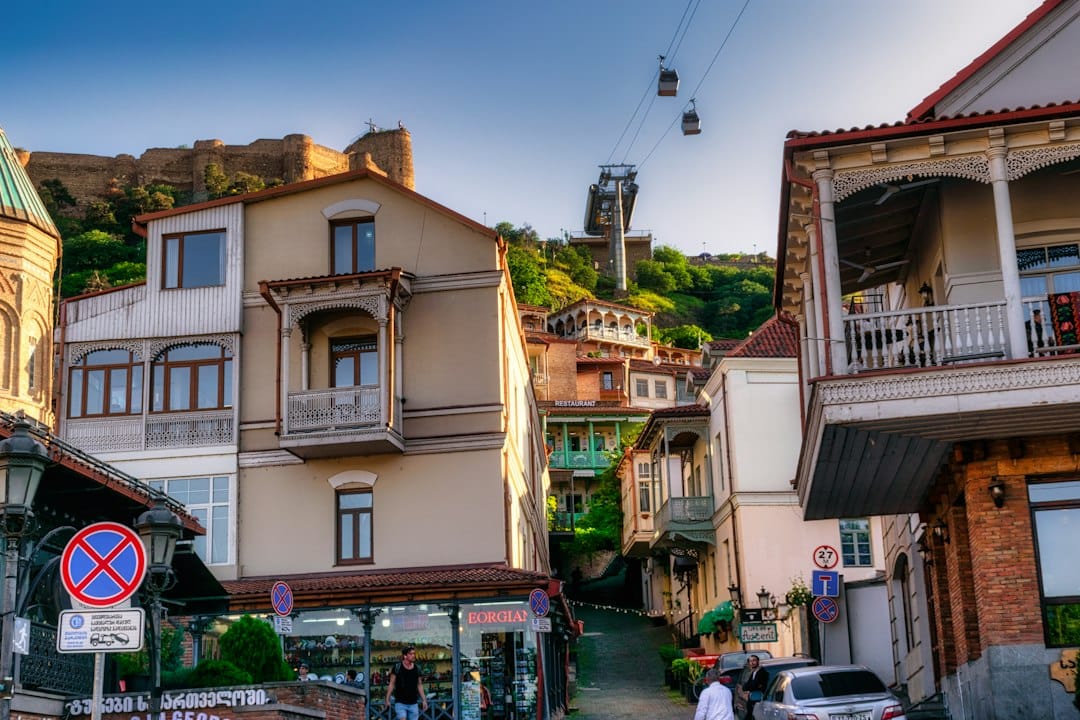
Housing will eat 40 to 60 percent of your budget, so neighbourhood choice is the decision that matters most. Vake and Vera are the nomad favourites for good reason. They are green, walkable, full of specialty coffee and close to most coworking spaces. A renovated one-bedroom on a monthly lease there typically runs somewhere around $600 to $1,000. Sololaki and the Old Town edges are more atmospheric, with crumbling balconies and hidden courtyards. They are also hillier, noisier at night and patchier on renovation quality, so expect a similar price range with more variation.
Saburtalo is the pragmatic choice. It is newer, less charming and full of high-rises, but it is well connected by metro, packed with supermarkets, and often $150 to $300 a month cheaper than Vake for a comparable flat. Chughureti, around Marjanishvili and the Fabrika complex, is the creative middle ground. It has a younger crowd and good bars, and rents sit between Saburtalo and Vera. Avoid committing to Old Tbilisi's tourist core for a long stay. It is beautiful for a weekend and exhausting by week three.
The biggest money lever is how you book. Airbnb monthly rates in Tbilisi often carry a 30 to 50 percent premium over what you will find through local Facebook groups, Telegram channels or agencies such as those listed on ss.ge and myhome.ge. The smart move is to book two weeks on Airbnb, view apartments in person, then sign directly. Utilities are usually extra on local leases. Budget around $40 to $80 a month in summer, and considerably more in winter if the flat relies on gas heating. If you would rather skip lease hunting entirely, co-living spaces are a reasonable middle option for your first month.
Enjoying this? Get more like it.
Weekly picks for remote workers and digital nomads — tools, destinations, and honest takes, straight to your inbox.
Subscribe free →Eating, Drinking and the Supra Effect
This is where Tbilisi still delivers on its legend. A filling meal at a local spot costs a handful of lari: a plate of khinkali, a shared khachapuri, a lobio pot and a carafe of house wine. Two people can eat well for $15 to $25 at a mid-range Georgian restaurant. Bakeries selling hot shotis puri and lobiani for pocket change are on nearly every block. They are the reason many remote workers stop bothering with breakfast at home.
Groceries are cheap if you shop like a local and expensive if you do not. Fresh produce, cheese, bread and wine from the Dezerter Bazaar or neighbourhood markets cost a fraction of supermarket prices back home. Imported goods are a different story. Your favourite cereal, decent coffee beans, oat milk and Western cleaning products can cost as much as or more than in Western Europe. A realistic grocery budget for one person cooking most meals is around $200 to $300 a month. That figure drops if you lean into Georgian staples and rises fast if you insist on your usual brands.
The real budget risk is social. Georgian hospitality is generous and contagious, and the city's natural wine bars, rooftop terraces and third-wave cafes add up faster than you would expect. A flat white in Vake often costs close to what it does in Berlin. A night out with natural wine, small plates and a cab home can easily hit $40 to $60. None of this is a reason to stay in. Dinners and long tables are the best part of Tbilisi life. But do set a dining-out number for the month and check it weekly, because the cheapness is precisely what makes overspending feel harmless.
Getting Around, Staying Connected and Coworking
Transport is close to a rounding error in your budget. The metro and city buses cost about a lari per ride with a rechargeable transport card or a contactless bank card. Bolt and Yandex Go rides across central Tbilisi typically run a few dollars. Most people end up spending $30 to $60 a month on transport, even with liberal Bolt use. Getting in from the airport is cheap too: the city bus costs a couple of lari, and a ride-hail is usually under $15. Ignore the drivers who approach you in arrivals with inflated quotes.
Mobile data is cheap and fast. Magti, Silknet and Cellfie all sell prepaid packages with generous data for well under $15 a month. Pick up a local SIM on arrival rather than roaming. If you prefer the convenience of an eSIM for your first few days, our Nomad SIM card review covers whether it is worth paying the premium. Home fibre is widely available in renovated apartments, but always ask for a speed test before signing. Older buildings sometimes have patchy connections that will wreck your video calls.
The coworking scene is solid without being overwhelming. Fabrika's shared spaces, Impact Hub Tbilisi and the Terminal network cover most needs. Hot desks are commonly in the $100 to $200 per month range, and day passes are available if you only want an office a few times a week. Plenty of remote workers skip coworking entirely and rotate through Vake and Vera cafes. Those cafes are generally laptop-friendly, but buy something every couple of hours. Factor in a gym too: decent chains and independent gyms run roughly $30 to $70 a month.
Money Mistakes That Quietly Inflate Your Budget
Mistake number one is underestimating winter. Tbilisi winters are not brutal, but many older apartments are poorly insulated and heated by gas boilers or inefficient electric units. Bills that sat around $40 in September can triple by January. When viewing a flat between November and March, ask the landlord for last winter's utility bills. Check for central heating or a modern boiler, and look at the windows. Single-glazed frames will cost you money every single month.
Mistake number two is treating the first apartment as permanent. Newcomers often lock into a three-month Airbnb in the wrong neighbourhood because it looked good online. They then pay a premium to live somewhere loud, hilly or far from everything they actually do. Mistake number three is the slow bleed of ATM and card fees. Some ATMs charge withdrawal fees on top of whatever your home bank adds, and dynamic currency conversion prompts will happily charge you an ugly rate. Always choose to be charged in lari, and use a multi-currency card where possible.
The final mistake is less obvious: burning out on the social whirlwind. Tbilisi's nomad and expat scene is tight-knit, the wine is cheap and the late nights are frequent. A month of saying yes to everything costs money, and it costs energy too. Pacing yourself, especially in your first few weeks, protects both. Our guide to avoiding digital nomad burnout has practical ways to build a sustainable routine in a city that makes it very easy to abandon one.
Money mistakes that quietly inflate a Tbilisi budget
The costliest habits newcomers fall into, and the fix this guide gives for each.
Underestimating winter heating bills
CostPoorly insulated flats send winter utility bills up sharply.
FixAsk the landlord for last winter's utility bills.
Treating the first apartment as permanent
CostYou pay a premium to live somewhere loud, hilly or far.
FixBook short on Airbnb, view in person, then sign directly.
Paying ATM and conversion fees
CostWithdrawal fees and dynamic currency conversion quietly add up.
FixAlways choose to be charged in lari.
Saying yes to everything
CostThe social whirlwind costs money, and it costs energy too.
FixPace yourself, especially in your first few weeks.
IllustrativeAdvice from the post above. No figures shown.
Banking, Cash and the Bigger Financial Picture
Card payments are accepted almost everywhere in central Tbilisi, from supermarkets to most restaurants. Cash still matters at bazaars, small bakeries, some taxis and village guesthouses outside the city. Keep a modest stash of lari on you. Opening a local account with Bank of Georgia or TBC Bank is often possible for foreigners with just a passport. It has become popular with long-stayers because it makes rent transfers and daily payments simpler. Requirements change and vary by branch and nationality, so check current policy before counting on it.
A big part of Tbilisi's financial appeal sits beyond monthly living costs. Many nationalities can stay visa-free for up to a year, which removes the visa-run expenses that eat into budgets elsewhere. Georgia's small business status for individual entrepreneurs, with its low turnover-based tax rate, also gets a lot of attention in nomad circles. It can be genuinely attractive, but eligibility and tax residency rules are nuanced. Talk to a qualified local accountant before assuming it applies to you, and do not let tax savings be the only reason you choose a base.
Finally, build a buffer. Set aside one month's expenses, plus a deposit, for your first arrival. Local leases usually ask for the first month and a deposit up front, and you may pay for a short-term stay while you hunt. That means your first month in Tbilisi can cost 50 to 100 percent more than every month after it. Plan for that spike and the rest of your stay will feel as affordable as the city's reputation promises.
So, how much money will you need for Tbilisi? For most remote workers, $1,500 to $2,000 a month buys a genuinely good life: a renovated flat in a leafy neighbourhood, great food, cheap wine, easy transport and weekend escapes into some of the most dramatic landscapes in the region. Go leaner in Saburtalo and you can live well on closer to $1,000. Chase the terrace apartment in upper Vake and the sky is the limit. The city rewards people who book their first weeks short, then negotiate locally.
The bottom line is that Tbilisi is no longer dirt cheap, but it is still excellent value. Very few cities combine this level of character, food culture and visa flexibility at this price. Get the rent right, respect the winter heating bill and keep an eye on the dinner tab. The rest takes care of itself.
FAQ
how much does rent cost in Tbilisi
A renovated one-bedroom in popular neighbourhoods like Vake and Vera typically costs $600 to $1,000 per month, while Saburtalo offers similar apartments for $150 to $300 cheaper. Booking through local Facebook groups and agencies is 30 to 50 percent cheaper than Airbnb monthly rates.
what is a reasonable monthly budget for Tbilisi
A comfortable month for most remote workers costs $1,500 to $2,000, which covers a renovated one-bedroom in a good neighbourhood, coworking or cafes, dining out several nights a week, and occasional trips. A lean budget is $1,000 to $1,300 if you cook most meals and live in less central areas, while a splurge month starts at $2,500.
how much do utilities cost in Tbilisi
Summer utilities typically run $40 to $80 per month, but costs increase considerably in winter if the apartment relies on gas heating, with some bills tripling by January. It's important to check a flat's heating system and ask landlords for previous winter bills before signing a lease.
how much money should I save before moving to Tbilisi
Plan for your first month to cost 50 to 100 percent more than subsequent months due to deposits, short-term accommodation while apartment hunting, and initial setup costs. You should have one month's expenses plus a deposit set aside before arriving.