Where to Stay in Bali: Canggu vs Ubud vs Seminyak
Choosing where to stay in Bali matters less at the island level than at the neighbourhood level, because you will spend most of your time inside a small bubble. Bali is bigger than most first-timers expect, and the traffic is worse than anyone warns you. Once you settle into a neighbourhood, you will rarely leave it on a weekday. So the real question is not whether to go to Bali. It is which Bali.
For most remote workers, that comes down to three names: Canggu, Ubud and Seminyak. All three have working cafés, fibre internet in the right buildings, and a community of people doing exactly what you are doing. They feel completely different to live in, though. Picking the wrong one can turn a dreamy three-month stint into a sweaty, horn-honking slog, and picking the right one can make Bali feel like home within a week.
This guide covers the Canggu vs Ubud question, with Seminyak as the underrated wildcard. It explains which pockets of each area are worth basing yourself in, what Bali digital nomad accommodation actually looks like on the ground, what a day of eating costs, and which kind of remote worker each area suits best.
Canggu vs Ubud vs Seminyak: The Quick Verdict
If you want the short version, here it is. Canggu is the social, surf-and-smoothie-bowl nomad capital. It has the densest concentration of coworking spaces, laptop-friendly cafés and networking events, and the heaviest traffic and construction noise to go with them. Ubud is the green, inland, slower alternative. It is quieter, more spiritual, better for deep focus, and a long way from the beach. Seminyak is the polished, slightly grown-up option, with boutique shopping, better restaurants per square metre and fewer dedicated work hubs.
None of these is objectively the best. They answer different questions. Do you want to meet fifty people in your first fortnight? Go to Canggu. Do you have a book to finish or a product to ship, and want rice paddies instead of beach clubs outside your window? Go to Ubud. Do you prefer a more comfortable, hotel-style base close to the airport, with a decent dinner within walking distance? Seminyak is your answer.
One logistical point shapes everything else. Moving between these areas is not a casual trip. Canggu and Seminyak sit next to each other on the southwest coast, but even that short hop can take far longer than the map suggests at rush hour. Ubud is a properly separate trip inland. Treat each area as its own town, not a district you can pop over from. Many nomads split a longer stay, with a month in one area and then a move, rather than trying to commute between them.
Canggu: The Default Nomad Base, and Why It Earned That
Canggu is not really one place. It is a sprawl of villages stitched together by narrow roads and rice fields that shrink every year. Batu Bolong is the loud, central strip, full of bars, surf shops and late nights. It is great for a first week and tiring for a third month. Berawa is more established and family-friendly, and it holds a cluster of the bigger coworking spaces and gyms. Pererenan, just west, is the current favourite for longer stays. It is calmer and greener, with some of the best new cafés, and still a short scooter ride from the action. If you can, live in Pererenan or Berawa and visit Batu Bolong, not the other way round.
For work, Canggu is hard to beat. Dedicated coworking spaces with backup power and proper chairs are easy to find. Almost every café assumes you will open a laptop, and the community calendar is packed with skill-shares, founder meetups and sunset sessions. Accommodation ranges from simple guesthouse rooms with a shared pool to private one-bedroom villas with a desk. A growing number of co-living setups bundle a room, a workspace and an instant social circle. If that last option appeals, our guide to affordable co-living spaces for digital nomads is worth a read before you book.
The trade-offs are real, and you should go in with your eyes open. Canggu is effectively scooter-only. Walking along the roads ranges from unpleasant to unsafe, and ride-hailing gets slow at peak times. Construction is constant, so a quiet villa today can have a building site next door in a month. Ask about neighbouring plots before signing anything long-term. The 'Shortcut' road connecting Berawa and Batu Bolong is a notorious bottleneck, so choose a base that keeps your daily loop of home, workspace and food tight.
Enjoying this? Get more like it.
Weekly picks for remote workers and digital nomads — tools, destinations, and honest takes, straight to your inbox.
Subscribe free →Ubud: Rice Fields, Slower Days and Deep Focus
Ubud: Rice Fields, Slower Days and Deep Focus
For living, look just outside central Ubud.
Illustrative figures — composed for shape, not sourced
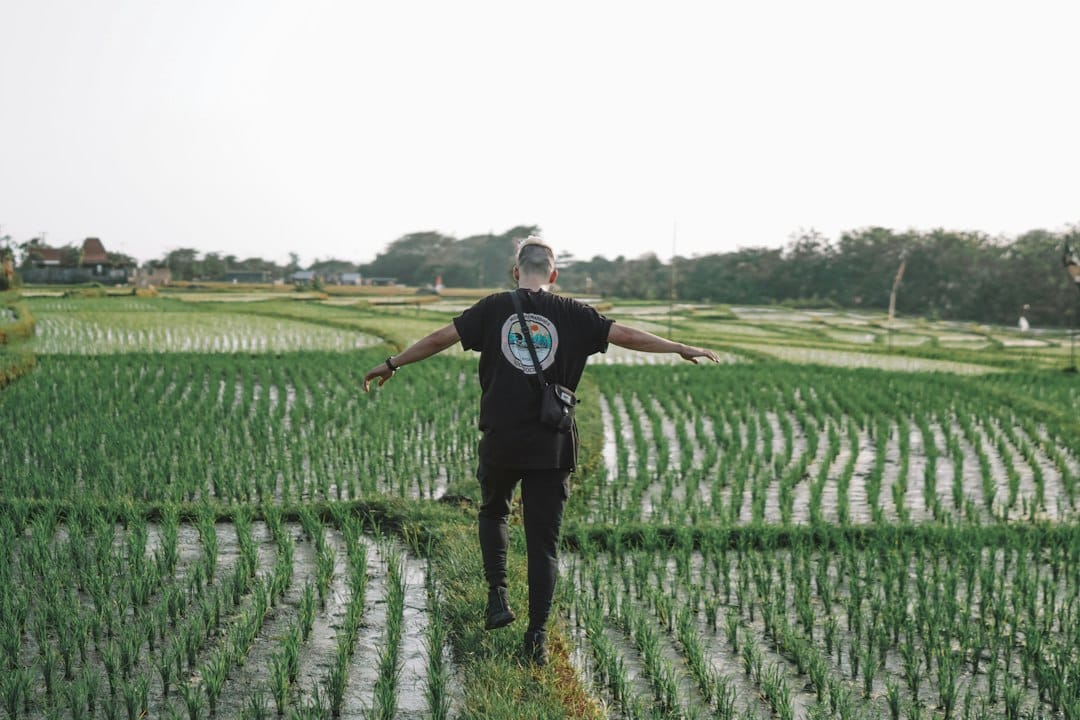
Ubud is where Bali's cultural heart still beats loudest. It has temples on every corner, daily offerings on the pavement, and jungle valleys that make your morning coffee feel cinematic. Central Ubud, around the main street and the market, is busy with day-trippers and best treated as somewhere to visit. For living, look just outside it. Penestanan, up the hill to the west, is a long-standing favourite with remote workers, with walking paths between rice fields and villas tucked away from traffic. Nyuh Kuning, south near the Monkey Forest, is a tidy, quiet village with a real neighbourhood feel. Sayan has the dramatic valley views, at a price.
The work scene is smaller than Canggu's but more focused. There are a handful of solid coworking spaces and plenty of cafés with views that make you want to stay all afternoon. The community leans towards writers, designers, coaches and people on a wellness reset rather than e-commerce founders. If your last stretch of travel left you running on fumes, Ubud's yoga studios, healthy food and early-to-bed rhythm make it the natural place to recover. Pair it with the habits in our guide to managing digital nomad burnout and you might leave in better shape than you arrived.
A few practical notes. Ubud is inland and higher up, so it is cooler in the evenings but more humid, and rainy season hits harder. Choose accommodation with good airflow, and check for mould in wardrobes before you unpack. The beach is a proper excursion, not a quick dip after work. If ocean access is non-negotiable for you, Ubud will start to feel like a beautiful cage. Many villas sit down long, unlit paths, which is lovely by day and less fun at night with a laptop bag, so ask exactly how the property is reached.
Seminyak: Polished, Central and Quietly Underrated for Work
Seminyak often gets written off as a holiday zone, but that undersells it. Yes, it has the famous beach clubs and the boutique shopping strips. It also has some of the best restaurants on the island, more established infrastructure, and a location that keeps the airport reasonably close by Bali standards. Petitenget is the sweet spot, upscale but liveable, with good cafés and a short walk to the sand. The streets around Jalan Kayu Aya, often still called Oberoi, are buzzier. The edges of Kerobokan, inland, offer more space and lower prices while keeping Seminyak's restaurants within easy reach.
For work, Seminyak has fewer purpose-built coworking spaces than Canggu, so plan around a strong home setup or a café shortlist. Many remote workers here rely on hotel lobbies, villa Wi-Fi and the occasional day pass. Confirm the upload speed, not just the download speed, before you commit to a month. Because you will spend more time on shared and hotel networks, it is worth reading up on hotel Wi-Fi security with a VPN if client work is involved.
Who is Seminyak really for? Couples who want comfort over scene. Small families who value pavements, supermarkets and international clinics nearby. Professionals on shorter stays who would rather not burn a week figuring out scooter logistics. It costs more on average, especially for accommodation with a pool and anything beachfront. You do get a more grown-up, less transient atmosphere for that premium, and Canggu's cafés are close enough for a weekend brunch run.
What Eating and Living Costs Look Like Day to Day
Food is where your Bali budget either stretches beautifully or quietly balloons. As of October 2026, according to Spotwise's Bali food price breakdown, a meal at a local warung typically costs $2–$5. A mid-range restaurant runs $6–$12, a café $8–$15, and a beach club or premium venue $15–$40+. That spread is enormous. Someone who eats nasi campur at a warung for lunch will have a very different month from someone who works out of trendy cafés every day.
Each area nudges you towards a different bracket. Canggu's whole social life runs through cafés, so nomads there often drift into the $8–$15 range by default. Order an iced latte and a brunch plate in your coworking breaks and the bill adds up fast. Ubud has the easiest access to excellent, cheap warungs and plant-based spots, making it the most forgiving for a tight budget. Seminyak puts the $15–$40+ beach club and fine-dining tier right on your doorstep, which is fantastic for a celebration and dangerous as a habit. A simple rule works well everywhere: warung for lunch, café for working, and treats on weekends.
Accommodation follows the same logic. Monthly rates are almost always far better value than nightly ones, so book a week or two on a booking platform first. Then scout in person and negotiate a monthly deal directly with guesthouse or villa owners. Local Facebook groups and word of mouth turn up options that never reach the big sites. These include simple 'kos' rooms, the Indonesian equivalent of a long-stay boarding room, as well as villas whose owners prefer one reliable tenant to a stream of short bookings. Always confirm what is included: electricity, cleaning, Wi-Fi speed and drinking water can swing the real monthly cost noticeably. For that first week or two, Booking.com lets you compare guesthouses and villas in Canggu, Ubud and Seminyak side by side, filtering by price and guest rating.
ℹ️ Some links in this article are affiliate links. If you buy or book through one, we may earn a commission at no extra cost to you. It never affects which providers we include or how we rate them. Full disclaimer →
Choosing Your Base: Match the Area to How You Work
Choosing Your Base: Match the Area to How You Work
Canggu for connection, Ubud for concentration, Seminyak for comfort.
Illustrative figures — composed for shape, not sourced
The best way to decide is to be honest about your work week rather than your holiday fantasy. Solo nomads who want community, collaboration and a busy social calendar should start in Canggu, ideally Berawa or Pererenan. Deep-focus workers, creatives and anyone on a wellness reset will get more done in Ubud's Penestanan or Nyuh Kuning. Couples and small families tend to be happiest in Seminyak or a quieter corner of Pererenan, where daily life is easier and the evenings are calmer. Short-stay professionals, in Bali for two or three weeks with a full client load, should lean towards Seminyak for its proximity to the airport and lower setup friction.
Think about time zones too. If your calls fall late at night Bali time, a lively strip in Batu Bolong or Oberoi will fight you every evening. A villa down a quiet gang (lane) in Ubud or Pererenan will not. For early-morning workers, Ubud's natural rhythm of early sunrise, early dinner and early sleep is a gift. Whatever you choose, prioritise three things in your accommodation: a real desk and chair, a backup internet option such as a local SIM with a generous data package, and a short daily commute to the places you will actually use.
Finally, do not treat your first choice as permanent. One of Bali's great advantages is how easy it is to try a second area. Plenty of long-stayers do a month in Canggu to build a network, then retreat to Ubud to actually get things done, or the reverse. Booking short and staying flexible costs a little more at first, but it beats being locked into a six-month lease in a neighbourhood that does not fit.
So, where should you stay in Bali? If you only remember one thing, make it this: Canggu for connection, Ubud for concentration, Seminyak for comfort. Each has a distinct personality, and the right one depends entirely on how you like to work, eat and unwind. Pick the pocket within the area as carefully as the area itself. Pererenan over Batu Bolong, Penestanan over central Ubud, Petitenget over the busiest beach-club strips.
Book a short first stay, scout on foot or by scooter, and negotiate a monthly rate once you know which streets feel like home. Get that right and Bali stops being a bucket-list trip. It becomes one of the most rewarding places on the planet to build a remote working life.
FAQ
how much does food cost in Bali
A meal at a local warung typically costs $2–$5, a mid-range restaurant runs $6–$12, a café costs $8–$15, and beach clubs or premium venues range from $15–$40 or more. Your total food spending depends largely on which areas you frequent and how often you eat at cafés versus warungs.
is Ubud or Canggu better for remote work
Canggu is better if you want community and networking with dedicated coworking spaces and café culture, while Ubud is better for deep focus and concentration with fewer distractions and a smaller, more focused work community. Your choice should depend on whether you prioritize connection or concentration.
what are the best neighborhoods to stay in Ubud
Penestanan, up the hill to the west, is a long-standing favourite with walking paths between rice fields and villas away from traffic. Nyuh Kuning, south near the Monkey Forest, is a quiet village with a real neighbourhood feel, while Sayan offers dramatic valley views at a higher price.
how do you get between Canggu Ubud and Seminyak
Moving between these areas is not a casual trip because traffic is severe and distances are deceptive; Canggu and Seminyak are next to each other on the coast but can take much longer than expected at rush hour, while Ubud is a properly separate trip inland. Many nomads treat each area as its own town and split longer stays between them rather than commuting.
Sources
Illustrative, composed for shape rather than sourced: Ubud: Rice Fields, Slower Days and Deep Focus; Choosing Your Base: Match the Area to How You Work. Updated 3 Nov 2026.