Where to Stay in Medellín (El Poblado vs. Laureles)
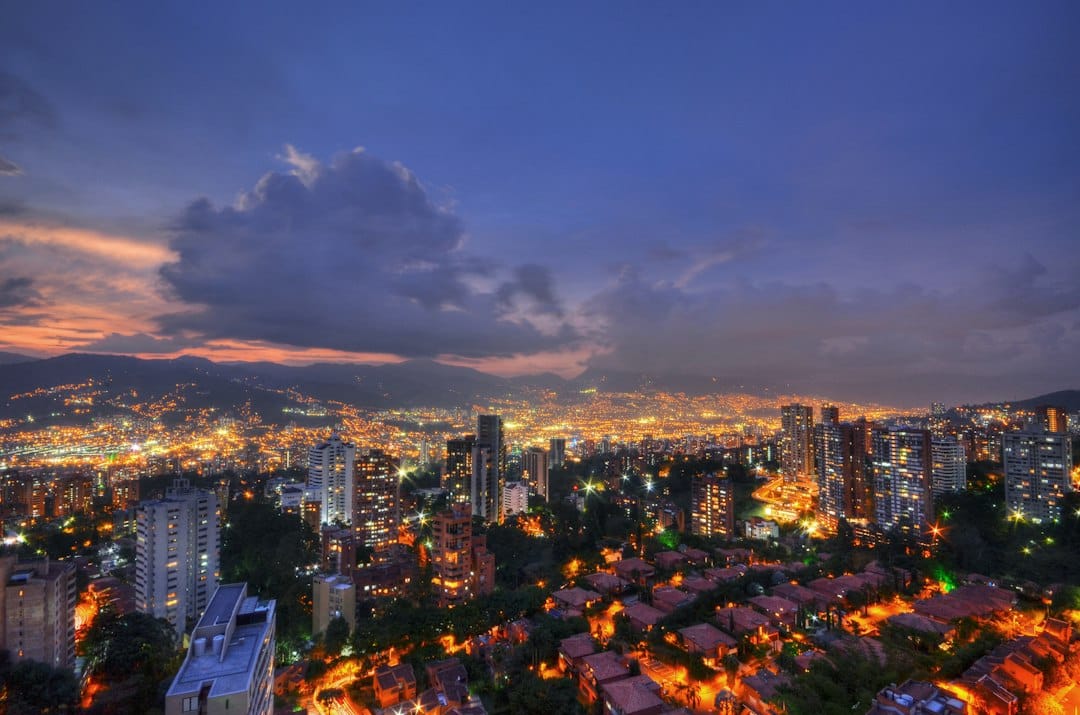
Stand on a balcony in El Poblado at dusk and Medellín reveals itself in layers: brick-red towers stacked up the valley walls, the dark green crowns of the hills above them, and far below, the low hum of motorbikes threading through the Aburrá Valley. Cross the river to Laureles the next morning and the soundtrack changes completely. A neighbour hoses down the pavement outside a bakery. Tinto cups clink on a plastic table at the corner. Someone walks a pair of sleepy dogs in slow loops around a leafy park while the sun burns off the last of the cloud.
If you're working out where to stay in Medellín, those two scenes sit at the heart of the decision. El Poblado and Laureles are the neighbourhoods most remote workers shortlist, and both deliver the essentials: furnished apartments, fast internet, excellent coffee and streets that feel comfortable to walk. Yet they feel like two different cities sharing one valley. The right choice depends less on which one is better and more on what kind of month you want to have.
This guide walks through the El Poblado vs Laureles question the way you'll actually live it: on foot, at a café table, on a video call at nine in the morning and on the walk home after dinner. By the end you should know which side of the river suits your work, your budget and your temperament.
Two Neighbourhoods, One Valley
Medellín stretches along a long, narrow valley with the Medellín River running down its spine. El Poblado climbs the eastern slopes in the south-east of the city, its streets twisting up through ravines thick with bamboo and ferns. Laureles sits on the flat land west of the river, laid out in broad curves and quiet circles. Because the whole city enjoys the mild, spring-like climate it's famous for, the weather rarely tips the balance. The terrain does. In El Poblado you'll spend a lot of time going uphill. In Laureles you'll barely notice a gradient.
Their personalities run just as deep. El Poblado is the city's most affluent and internationally oriented district, home to gleaming high-rises, big shopping malls, rooftop bars and the nightlife strip around Parque Lleras. It's where most visitors land first, and the area has grown up around that fact. Laureles is a traditional residential neighbourhood, planned around tree-lined avenues and neighbourhood parks, with a large university and the city's main football stadium nearby. Families have lived here for generations, and the rhythm of daily life is set by locals rather than visitors.
It helps to remember that this isn't an all-or-nothing choice. The two neighbourhoods are a straightforward taxi or metro ride apart, and plenty of people base themselves in one and spend evenings or weekends in the other. Think of your decision as choosing where you'll wake up, buy groceries and do your deep work, rather than which parts of the city you're allowed to enjoy.
El Poblado: Hills, High-Rises and Late Nights
El Poblado: Hills, High-Rises and Late Nights
Provenza moves from coffee in the afternoon to music around Parque Lleras into the early hours.
Illustrative figures — composed for shape, not sourced
Spend an afternoon in Provenza and you'll understand the appeal straight away. Narrow lanes wind beneath enormous trees, their trunks wrapped in vines, and every second doorway opens onto a specialty coffee bar, a design shop or a restaurant with plants spilling over the balcony. By late afternoon the terraces fill with people closing laptops and ordering a first drink. By ten at night the music from the bars around Parque Lleras rolls through the streets, and it keeps rolling well into the early hours on weekends.
For remote workers, El Poblado offers the easiest landing in the city. You'll find the highest concentration of coworking spaces, laptop-friendly cafés and gyms, English is more widely spoken in shops and restaurants, and the apartment stock leans towards modern towers with pools, backup generators and a 24-hour doorman in the lobby. If this is your first time in Colombia, or you're arriving straight from a corporate job and want a gentle transition, the convenience is hard to beat. Everything you need, from a good flat white to a reliable laundry, is usually within a few blocks.
The trade-offs are real, though. Prices for rent, food and drinks run noticeably higher than elsewhere in the city, and it's easy to spend a month in a comfortable bubble without hearing much Spanish. The hills make walking a workout, and the upper reaches of the neighbourhood often require a taxi. Nightlife areas also attract opportunistic crime: phone snatching on busy streets is common, and there are widely reported cases of visitors being drugged after meeting strangers through dating apps. Keep your phone out of sight on the street, meet new people in busy public places, and never leave a drink unattended. None of this should put you off, but it belongs in your thinking from day one.
Enjoying this? Get more like it.
Weekly picks for remote workers and digital nomads — tools, destinations, and honest takes, straight to your inbox.
Subscribe free →Laureles: Tree-Lined Circles and a Local Rhythm
Laureles: Tree-Lined Circles and a Local Rhythm
Laureles suits remote workers who want to feel like residents rather than visitors.
Illustrative figures — composed for shape, not sourced
Mornings in Laureles begin at the bakery. Around Primer Parque, the smell of pandebono and fresh arepas drifts out onto the pavement while office workers grab a coffee on their way to the bus. Retirees settle onto park benches with the newspaper. By evening, the action moves to Carrera 70, known simply as La 70, where open-fronted restaurants serve heaping plates of bandeja paisa and the bars fill with locals watching football. On match nights, the streets near the stadium turn green and white, and the whole neighbourhood seems to hum.
For remote workers who want to feel like residents rather than visitors, Laureles has a lot going for it. The streets are flat and shaded, so walking to the supermarket, the gym or a café is genuinely pleasant, and a decent pair of walking shoes will see more use here than any taxi app. Evenings on the side streets are quieter, and your money tends to stretch further: rentals often come with more floor space, and a set lunch at a neighbourhood restaurant costs a fraction of a Provenza brunch. You'll also use your Spanish far more, which for many people is the whole point of slow travel.
There are compromises here too. Coworking options are fewer, English is less common, and some apartments are in older low-rise buildings without the pools and lobbies you'll find across the river. La 70 can be loud on weekends, so an apartment directly on the strip may test your patience if you start work early. Ground-floor units on busy corners pick up traffic noise, and older buildings sometimes have patchy internet, so ask about both before you book.
Picking Your Pocket: Micro-Neighbourhoods Worth Knowing
Neither neighbourhood is uniform, and the specific streets you choose can matter more than the name on the map. Within El Poblado, Provenza is the lively, walkable heart, ideal if you want cafés and restaurants on your doorstep but noisy on weekend nights. Manila sits lower and flatter, close to the bustle of Calle 10, with a mix of hostels, cafés and residential blocks that make it a practical, central choice. Further up the hill, in the areas around the Golden Mile and Los Balsos, the streets turn quiet, green and residential, with spacious apartments and wide views, but you'll rely on taxis to get almost anywhere.
In Laureles, the area around Primer Parque has the strongest café culture and a gentle, village-like feel. Segundo Parque is a little quieter still, with residential streets that empty out early in the evening. La 70 itself is the place for food and nightlife, best enjoyed a few blocks away rather than directly above. The neighbouring Estadio area puts you close to the stadium, the sports complex and the metro, which is handy if you plan to explore the wider city or keep fit at the public running track and pools.
Before committing to a month-long booking, it's worth checking the specifics. Look the street up on a map at night-time zoom and see what sits nearby: a bar, a school, a busy avenue. Ask the host directly how loud it gets on Friday and Saturday nights, and whether the building has a doorman. If you can, book a few nights in a short-term rental first and walk the area at different times of day before signing up for anything longer. Booking.com is a quick way to find those first few nights in El Poblado or Laureles, filtering by price and guest rating.
ℹ️ Some links in this article are affiliate links. If you buy or book through one, we may earn a commission at no extra cost to you. It never affects which providers we include or how we rate them. Full disclaimer →
Working Remotely From Either Side of the River
Working Remotely From Either Side of the River
Choice favours El Poblado; calm favours Laureles; co-living operates in both.
Illustrative figures — composed for shape, not sourced
El Poblado wins on sheer choice of workspaces. Dedicated coworking spaces, hotel lounges and big, bright cafés with plug sockets at every table make it easy to change your scenery every day. Laureles has fewer formal coworking spaces, but its cafés tend to be calmer during the working day, and you'll often find a corner table free on a weekday morning without hunting for it. If you'd like a built-in community from the moment you arrive, co-living spaces bundle housing, desks and social life together, and several operate in both neighbourhoods.
Fibre internet is widely available across both areas, but quality varies from building to building. Ask your host for a recent screenshot of a speed test taken in the apartment itself, not the lobby, and if video calls are central to your work, ask whether the router is in the room where you'll actually sit. A local prepaid SIM from one of the major carriers makes a sensible backup for the occasional outage. Colombia stays on the same time zone year-round with no daylight saving, which lines up neatly with clients in North America.
The city also shapes your daily rhythm in quiet ways. Mornings are usually clear and fresh, ideal for focused work by an open window. Afternoons often bring a short, heavy shower that sends everyone ducking under awnings, which makes a good excuse to stay put at your desk. By evening the air is cool and soft again, and whether you're walking to dinner along the circles of Laureles or climbing into Provenza, the day ends with the kind of light that makes it easy to log off on time.
Getting Around and Settling In
Medellín's metro is a point of real civic pride: clean, efficient and treated with a respect that surprises many visitors. El Poblado station sits on the main north-south line along the valley floor, a walk downhill from Manila and Provenza and a stiffer climb back up. Laureles is served by stations on the line heading west from the centre, with Estadio the most convenient for much of the neighbourhood. A rechargeable Cívica card saves you queuing for tickets, and the connecting cable cars make a memorable weekend outing up into the hillside comunas.
For day-to-day life, the difference between the two areas is mostly about your legs. In Laureles, almost everything is walkable, and the flat streets suit cycling too. In El Poblado, you'll likely use ride-hailing apps or taxis more often, especially if you stay higher up the hill or head home late. At night, in either neighbourhood, ordering a ride through an app is generally a safer bet than flagging a cab on the street.
When it comes to rent, El Poblado generally commands a premium for its location and amenities, while Laureles tends to offer more space for the same money. Monthly stays often unlock a discount on the nightly rate, and it's always worth asking politely, particularly outside the busy December holiday season. If Medellín is one stop on a longer journey, it often appears on lists of budget-friendly slow travel cities, and choosing Laureles is one of the easiest ways to keep it that way.
Which Neighbourhood Suits Your Kind of Trip
Which Neighbourhood Suits Your Kind of Trip
Short first visits suit El Poblado; longer, slower stays suit Laureles, and many people do both.
Illustrative figures — composed for shape, not sourced
If this is your first visit to Medellín, you're staying a couple of weeks or less, or you want to meet other remote workers quickly, El Poblado makes the most sense. The infrastructure is built for exactly your situation: easy English, a dense web of coworking spaces and social events, and modern apartments where everything simply works. It's also the better choice if your work involves frequent client calls and you'd rather not gamble on an older building's wiring.
If you're staying a month or more, learning Spanish, keeping an eye on your budget, or travelling as a couple or a small family who value quiet evenings and flat streets for strollers and scooters, Laureles is likely to feel more like home. Many longer-term visitors end up doing both: a week or two in El Poblado to find their feet, followed by a move across the river once they've got their bearings and want a slower, more local pace.
In the end, the El Poblado vs Laureles decision comes down to the soundtrack you want for your days. One offers rooftop terraces, buzzing cafés and the energy of a city that welcomes the world. The other offers bakery mornings, park benches and the satisfying sense of slipping into a neighbourhood's routine. Both sit in the same green valley, under the same soft light, and both make a superb base for remote work.
So choose the side of the river that matches the month you're hoping for, check the specific street before you book, and leave room to wander. Medellín has a way of rewarding curiosity, and the best neighbourhood is often the one you discover on foot after the laptop is closed for the day.
FAQ
is el poblado or laureles better for remote workers
Both neighborhoods work well for remote work, but El Poblado offers more coworking spaces and laptop-friendly cafés with faster English support, while Laureles has fewer formal coworking spaces but quieter cafés during working hours. El Poblado is better for first-time visitors or short stays, while Laureles suits longer stays and those wanting a more local, budget-conscious experience.
why is el poblado more expensive than laureles
El Poblado charges higher prices for rent, food and drinks because it's the city's most affluent and internationally oriented district with modern amenities like high-rises, pools, and 24-hour doormen. Laureles is a traditional residential neighborhood where money tends to stretch further and apartments often come with more floor space for the same price.
which medellín neighborhood is safer el poblado or laureles
The post notes that El Poblado's nightlife areas attract opportunistic crime including phone snatching and drugging after meeting strangers, so you should keep your phone hidden and meet new people in busy places. Laureles is described as quieter and more residential with a local rhythm, though the post doesn't make explicit safety comparisons between the two.
how walkable is each medellín neighborhood
Laureles is highly walkable with flat, shaded streets where walking to shops, gyms or cafés is genuinely pleasant, while El Poblado's hills make walking a workout and the upper reaches often require a taxi. In Laureles, good walking shoes will see regular use, whereas in El Poblado you'll likely use ride-hailing apps more frequently.
Sources
Illustrative, composed for shape rather than sourced: Laureles: Tree-Lined Circles and a Local Rhythm; Working Remotely From Either Side of the River. Updated 3 Nov 2026.