Cheapest Cities to Fly Into in Southeast Asia
Short answer
Bangkok and Kuala Lumpur are usually the cheapest cities to fly into in Southeast Asia, because heavy airline competition and their roles as budget-carrier hubs keep fares low. Singapore often has surprisingly competitive long-haul fares. Ho Chi Minh City, Manila and Bali can undercut them all, depending on your departure city and the season.
A long-haul flight east brings its own kind of tiredness. There is the stale cabin air and the meal trays that arrive at hours belonging to no time zone. Somewhere over the Bay of Bengal, you slowly realise your body has stopped keeping track of the day. Then the doors open, the humidity wraps around you like a warm towel, and none of it matters anymore. Southeast Asia has a way of rewarding the journey. It doesn't always make that journey cheap, though, unless you know which door to walk through.
Budget travellers eventually learn a simple truth about this region. The price of getting here depends less on where you want to end up and more on where you land first. A ticket into one city can cost a fraction of a ticket into its neighbour an hour's flight away. The difference comes down to how airlines compete, where low-cost carriers base their fleets, and which airports the big long-haul airlines fight over. Once you understand that, the map starts to look different. It becomes less a set of destinations and more a network of doorways, some much cheaper to open than others.
This guide covers the gateway cities that offer the best value, why they're cheaper, and how to build a route that doesn't make you pay twice. That route might end at a hillside café in northern Thailand or a beach-shack coworking space in Bali. If you're still deciding where to base yourself after you land, pair this with our guide to the cheapest countries to visit in Southeast Asia, because a cheap flight is only half of an affordable stay.
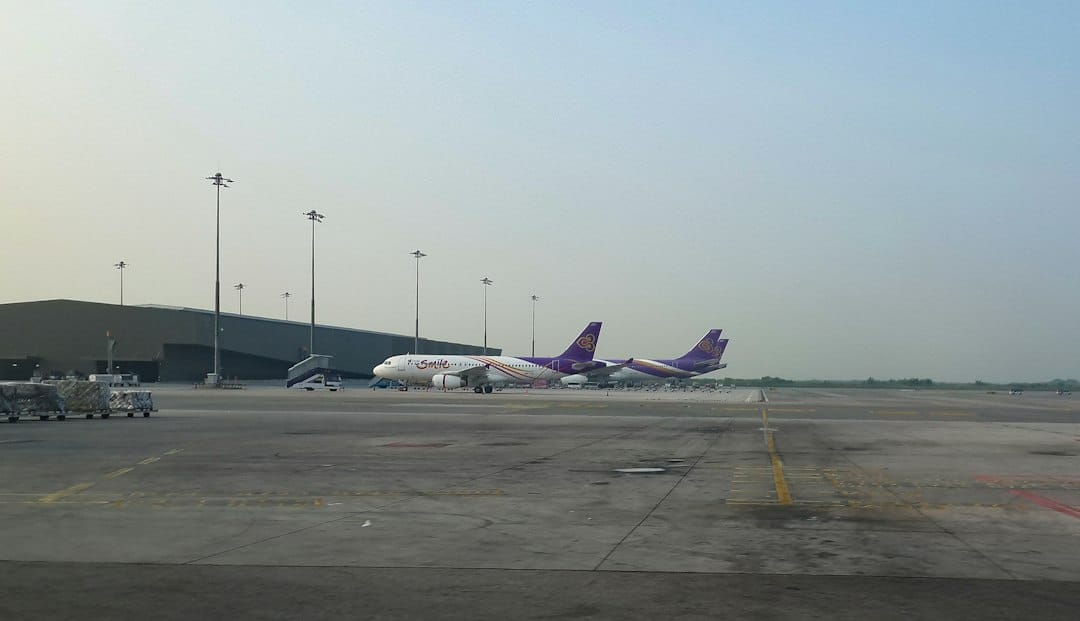
Why Some Cities Cost So Much Less to Reach
Airfare is not a measure of distance. It measures competition. When many airlines fly the same route, they have to fight for passengers, and that fight shows up as lower prices on the booking screen. Bangkok and Kuala Lumpur sit at the centre of dense webs of routes. Full-service carriers from Europe, the Middle East, East Asia and Australia all compete for seats into them. A city that only a few airlines serve directly can set its prices with little pressure. A city served by dozens of airlines cannot. That is why a slightly longer journey into a busy hub often costs much less than a shorter, more direct one into a quieter airport.
Then there are the low-cost carriers, which have reshaped how people move around this region. AirAsia runs a huge operation out of Kuala Lumpur's KLIA Terminal 2. Thai AirAsia and Nok Air fill Bangkok's Don Mueang airport with orange and yellow tails. VietJet dominates Ho Chi Minh City, Cebu Pacific is based in Manila, and Scoot, Singapore Airlines' budget arm, flies out of Changi. When a budget airline makes a city its home base, it fills that airport with cheap regional connections. The city then works as a launch pad. Your long-haul ticket can be a bit more expensive and still make sense, because the onward hop is cheap enough to cancel out the difference.
The last factor is less visible: the Gulf carriers and big Asian network airlines that route travellers through their own hubs. If you fly from Europe or North America, you will often connect in Doha, Dubai, Istanbul, Taipei, Seoul or Hong Kong before reaching Southeast Asia. These airlines compete hardest for the region's biggest markets, so their best fares tend to land in the biggest cities. That is why the cheapest options from one departure city keep pointing to the same few names, even when your real destination is somewhere smaller and more charming.
The Gateway Cities Worth Searching First
The Gateway Cities Worth Searching First
Six Southeast Asian gateway cities compared by main airports, budget carriers, onward connections, and suitability for different traveller types.
| City | Main Airport(s) | Budget Carriers | Best For |
|---|---|---|---|
| Bangkok | Suvarnabhumi (BKK) + Don Mueang (DMK) | Thai AirAsia, Nok Air | Thailand, Indochina access |
| Kuala Lumpur | KLIA + Terminal 2 (budget) | AirAsia (extensive network) | Malaysia, Indonesia, Vietnam |
| Singapore | Changi (SIN) | Scoot (Singapore Airlines budget) | Competitive fares from Europe, Australia |
| Ho Chi Minh City | Tan Son Nhat (SGN) | VietJet (dominant) | Vietnam coast, Southeast connections |
| Manila | Ninoy Aquino (MNL) | Cebu Pacific (based here) | North America, Pacific routes, islands |
| Bali (Denpasar) | Ngurah Rai (DPS) | Garuda, budget partners | Australia, parts of Asia |
Illustrative figures — composed for shape, not sourced
Bangkok is usually the first city worth checking, and often the last one you need to. It has two airports. Suvarnabhumi (BKK) handles most long-haul traffic, and Don Mueang (DMK) is the base for budget regional flights. That combination makes it one of the most flexible arrival points in the region. Few things feel as quietly thrilling as stepping out of Suvarnabhumi into the thick evening air, the smell of jasmine and exhaust mingling at the taxi rank, knowing that Chiang Mai, Phuket, Hanoi or Siem Reap is a short, cheap flight away. Kuala Lumpur is its closest rival. KLIA and its budget-focused Terminal 2 connect you to a large AirAsia network across Malaysia, Indonesia, Vietnam and beyond. Many travellers also find Malaysia an easy, low-friction place to land and get their bearings.
Singapore surprises people. The city has a reputation as the region's most expensive place to stay, so travellers often assume flying in must be costly too. In practice, Changi is one of the most competitive airports in the world, and fares from Europe, Australia and North Asia can rival or beat Bangkok's. The catch is what comes after the landing. Accommodation and daily costs in Singapore are much higher than in its neighbours. The smart move is often to land, enjoy a hawker centre dinner of chicken rice and iced lime juice, and fly or bus onward within a day or two.
Beyond these three, Ho Chi Minh City, Manila and Bali's Denpasar airport can all win depending on where you start. Ho Chi Minh City has become much better connected, and VietJet makes onward travel up the Vietnamese coast cheap. Manila is often the better-value entry from North America or the Pacific, with Cebu Pacific linking you to the islands. Bali, served by Ngurah Rai airport, sometimes has strong fares from Australia and parts of Asia, although travellers from Europe often find it cheaper to fly into Kuala Lumpur or Singapore and hop across. None of these cities is always the cheapest. Each one is worth checking every time.
Enjoying this? Get more like it.
Weekly picks for remote workers and digital nomads — tools, destinations, and honest takes, straight to your inbox.
Subscribe free →The Hub-and-Hop: How to Build a Cheaper Route
Hub-and-Hop routing strategy
Four-step process for building a cheaper two-ticket route into Southeast Asia: search the region, choose the hub, price the onward flight, and add a buffer for safety.
- Search the region broadly
Use explore map or regional search across several date ranges
- Identify the cheapest hub
Check which gateway is lowest from your home airport
- Price the onward hop
Search budget airline rates from hub to final destination
- Build in a buffer
Leave several hours between flights; overnight stay is safer
IllustrativeA summary of the steps described above, not a measured schedule.
The most reliable way to fly into Southeast Asia cheaply is to stop thinking of the trip as one ticket. Think of it as two. First, search the region broadly rather than a single city. Flexible tools like Google Flights' explore map or Skyscanner's search to a whole country or region let you see at a glance which hub is cheapest from your home airport in a given month. Run the search for several date ranges, because the cheapest gateway can change with school holidays, festivals and the shoulder seasons on either side of the monsoon.
Once you know the cheapest hub, price the onward hop to where you actually want to be. This is where the region's budget airlines earn their reputation. Short regional flights out of Bangkok, Kuala Lumpur or Singapore are often cheap enough that the total journey beats a direct ticket to a smaller airport by a comfortable margin. Not every low-cost carrier is equal, though. Some are generous with schedule changes and refunds. Others are strict about every kilogram of your bag. Our ranking of the best budget airlines in Asia breaks down which ones are worth trusting with a tight schedule.
The final step is to build in a buffer. When you book two separate tickets, the second airline has no obligation to rebook you if the first flight is late. That can quickly wipe out everything you saved. Leave several hours between flights at the very least. Better still, plan an overnight in the hub city. A night in a small guesthouse near the river in Bangkok, or a bowl of laksa near Kuala Lumpur's Bukit Bintang, turns a stressful connection into a gentle landing. Your jet-lagged body will thank you, and you'll arrive at your real destination ready to work rather than staggering out of the arrivals hall at dawn.
Common Mistakes That Quietly Erase Your Savings
The most common trap is the baggage fee. A headline fare on a budget carrier usually includes only a small cabin bag, and sometimes only a personal item. Add a checked suitcase at the airport rather than online and the price can climb sharply. If you're carrying a remote-work setup with a laptop, chargers, perhaps a portable monitor, plus a few months of clothing, price the bag before you compare fares. A slightly pricier ticket that includes luggage often works out cheaper. The second trap is specific to Bangkok. Travellers book a long-haul flight into Suvarnabhumi and an onward budget flight out of Don Mueang without realising they are separate airports. Getting between them across the city can take a long time in traffic, so plan for it.
Entry rules catch people out too. Several countries in the region, and the airlines that fly there, may ask for proof of onward travel before letting you board. Visa rules also differ widely from one border to the next. Vietnam, for example, requires many nationalities to arrange an e-visa in advance. Rules change often, so check official government sources for your passport before you book, not the night before you fly. Being turned away at check-in is the most expensive way to discover a cheap fare.
Finally, watch your arrival time. Many of the cheapest long-haul fares land in the small hours. A ticket that saves you a little but drops you into an empty arrivals hall at three in the morning can cost more than you expect once you add a premium taxi, an extra night's accommodation you can't check into yet, and a wasted, foggy first day. Sometimes the slightly more expensive afternoon arrival is the better deal. You land with the city still awake, a SIM card shop open, and time to wander out for street food before an early night.
Matching Your Arrival City to the Way You Work
The cheapest gateway is only cheap if it fits the life you're building on the other side. If you're heading to northern Thailand for a slow season of work, Bangkok is the obvious door. There are frequent, inexpensive flights north, plus the option of the overnight train if you'd rather watch the rice paddies roll past than sit in another departure lounge. Once you arrive, our guide to the coolest neighbourhoods in Chiang Mai will help you choose between the café-lined lanes of Nimman and the quieter, temple-dotted streets of the Old City.
If Vietnam is calling, compare Ho Chi Minh City and Hanoi directly before defaulting to a regional hub. Then remember that Da Nang, increasingly popular with remote workers for its beaches and steady pace, is a short domestic hop from either one. For Indonesia, and Bali in particular, Kuala Lumpur and Singapore are often worth pricing against a direct flight into Denpasar, especially from Europe. For the Philippines, Manila is the natural entry. Just give yourself time to adjust before rushing on to the islands, because Manila's traffic is legendary and tired travellers make expensive decisions.
Think about the first week of work, too, not just the first flight. Landing somewhere with fast, reliable internet and plenty of coworking options gives you a soft place to recover from jet lag without falling behind. Bangkok, Kuala Lumpur and Singapore all do this well. You can spend a few days there catching up on client calls, adjusting to the time difference, and stocking up on anything you forgot to pack, before moving on to the slower, more remote place that drew you here in the first place. A cheap flight that sets your whole month up well is worth far more than one that simply saves you money on paper.
The cheapest way into Southeast Asia is rarely the most obvious one. It's usually a busy, unglamorous hub where airlines fight hard for your booking and budget carriers wait to carry you onward. Bangkok and Kuala Lumpur lead the pack most of the time, Singapore regularly surprises, and Ho Chi Minh City, Manila and Bali each have their moments. The trick is to search broadly, price the whole journey rather than a single ticket, and leave enough slack in your plans that one delay doesn't undo all your careful savings.
Get those pieces right and the journey becomes part of the pleasure: a night of noodles in a city you hadn't planned to visit, a short flight over jade-green islands, and finally that first morning at your new desk, coffee in hand, ceiling fan turning slowly overhead. The money you didn't spend getting there is now yours to spend on staying a little longer, and staying longer is the whole point.
FAQ
why is Bangkok cheaper to fly into than other Southeast Asian cities
Bangkok has two airports and sits at the centre of a dense web of routes served by many competing airlines from Europe, the Middle East, East Asia and Australia. Additionally, Don Mueang airport is a major base for budget regional flights from Thai AirAsia and Nok Air, which makes onward travel cheap and helps offset any higher long-haul ticket price.
how do I find the cheapest Southeast Asia flight
Search the region broadly using flexible tools like Google Flights' explore map or Skyscanner's country or region search rather than booking a single ticket to one city. Then price the onward hop to your actual destination separately, as budget airlines often offer cheap regional flights that can make a two-ticket journey cheaper than a direct flight to a smaller airport.
what mistakes make cheap Southeast Asia flights expensive
Common mistakes include not pricing baggage fees upfront, not realizing Bangkok's two airports are separate, not checking visa and entry requirements before booking, and arriving during late-night hours which may require expensive taxis or extra accommodation. Checking these details before booking ensures your cheap fare actually stays cheap.
is Singapore expensive to fly into
Changi airport is one of the most competitive airports in the world, and fares from Europe, Australia and North Asia can rival or beat Bangkok's. However, accommodation and daily costs in Singapore are much higher than neighbouring countries, so the smart move is often to land briefly and fly or bus onward within a day or two.
Sources
Illustrative, composed for shape rather than sourced: The Gateway Cities Worth Searching First; The Hub-and-Hop: How to Build a Cheaper Route. Updated 10 Oct 2026.