The Cheapest Travel Destinations Right Now
There is a particular kind of arithmetic that governs the life of anyone earning in one currency and living in another. It is the quiet math that plays out in the back of your mind as you scroll through flight prices at midnight, as you compare the cost of a room with a desk and reliable wifi against the number sitting in your bank account. The good news, and the reason you are reading this, is that the world is currently full of places where that math tips generously in your favour.
Cheap is a slippery word, though. A destination can be cheap in the way a hostel bunk is cheap and still cost you dearly in lost productivity, patchy connectivity, or the slow grind of a place that was never built for someone who needs to log on at nine. The destinations worth chasing are the ones where low cost and genuine liveability overlap — where a month of rent, food, coffee and coworking comes to a figure that would barely cover a week back home, and where you can actually get your work done in between.
What follows is less a ranking and more a field guide. Currencies shift, visa rules change, and a city that felt like a secret in January can feel crowded by autumn. But the underlying logic of finding value holds steady, and the destinations below are, right now, among the most rewarding places to stretch a remote income further than you thought possible.
What Actually Makes a Destination Cheap
The headline figure everyone quotes is rent, and it matters, but it is only the first line of a longer ledger. A city can advertise two-hundred-dollar apartments and still drain your account through expensive imported groceries, taxi fares that assume you are a tourist, and coworking memberships priced for corporate expense accounts. When you weigh a place, weigh the whole basket: a month of housing with a proper desk, daily meals split between cooking and eating out, transport, a fast and reliable internet connection, and the occasional splurge that keeps you sane. That total is the real number.
Exchange rates are the invisible hand behind most of the current bargains. When your home currency is strong against a local one, everything priced locally becomes a small windfall, and several economies across Southeast Asia, Latin America, and the Balkans are currently trading at levels that flatter a dollar or euro income. The catch is that anything priced globally — a MacBook, an imported wine, an international flight — costs roughly the same everywhere, so the savings concentrate in the things that are made and served where you are: food from the market, a haircut, a room, a massage, a coffee poured by someone who lives down the street.
There is also the softer cost of friction. A destination that is technically cheap but requires a visa run every thirty days, or where the power flickers off each afternoon, or where you cannot find a single café that will let you sit for three hours, will cost you in stress and lost hours even if it never touches your bank balance. The cheapest place, in the truest sense, is the one where you can settle into a rhythm and keep it — where the low price comes without a hidden tax on your attention.
The Regions Offering the Best Value Right Now
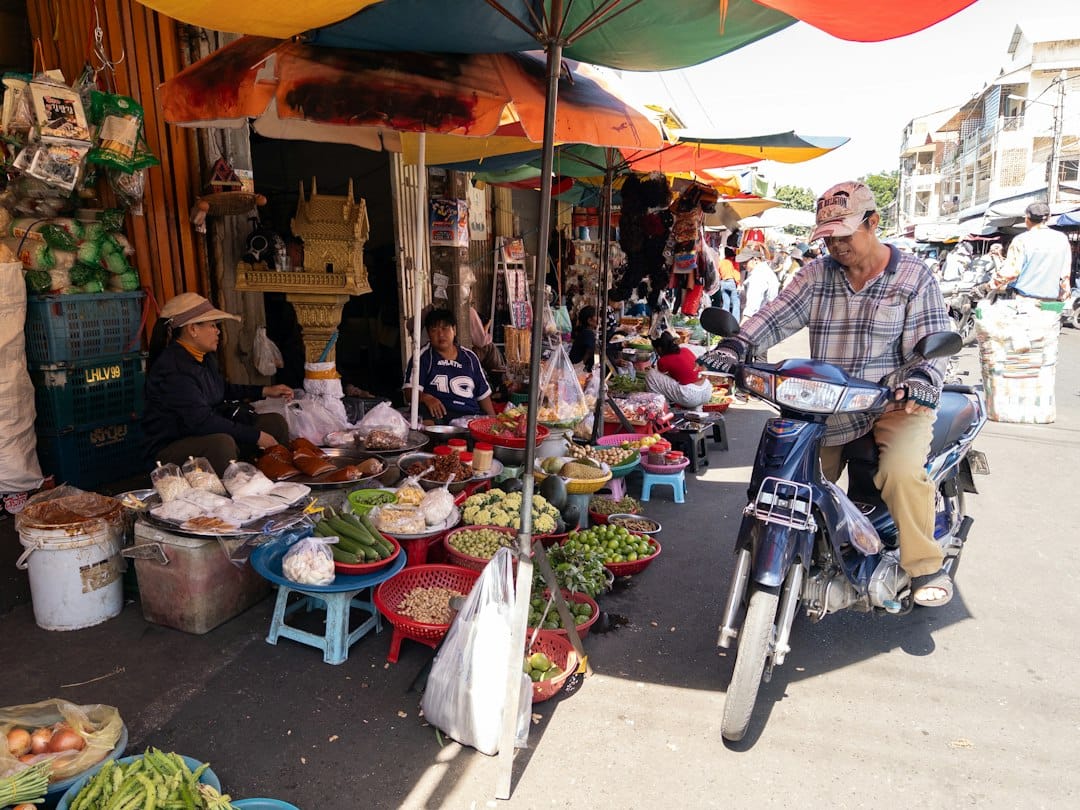
Southeast Asia remains the reliable heavyweight. In cities like Chiang Mai, Hanoi, and the smaller towns of the Vietnamese highlands, a comfortable furnished apartment can still be had for a few hundred dollars a month, street food costs less than a takeaway coffee back home, and the coworking scene has matured to the point where fast fibre and air-conditioned desks are the norm rather than the exception. The mornings smell of frying garlic and diesel; the afternoons are for tapping away in a café where an iced coffee costs the price of a bus ticket.
Latin America has quietly become one of the strongest-value regions for anyone working on a North American schedule, since the time zones align rather than fight you. Medellín, with its eternal spring and hillside neighbourhoods, and Mexican cities beyond the pricey coast still offer real value if you look past the most Instagrammed districts. The Balkans, meanwhile, are Europe's open secret — Tirana, Sofia, and the smaller Albanian coastal towns deliver a European texture of cobblestones and espresso at a fraction of the Western European price, often with generous visa terms for those carrying the right passport.
If you want a deeper look at specific cities and the numbers behind them, it is worth reading through a dedicated breakdown of slow travel cities that combine low cost with genuine liveability. The pattern across all these regions is the same: value clusters in the second cities and the shoulder seasons, in the places that have the infrastructure of a hub without the price tag that fame brings.
Enjoying this? Get more like it.
Weekly picks for remote workers and digital nomads — tools, destinations, and honest takes, straight to your inbox.
Subscribe free →
Stretching Your Money Once You Arrive
Stretching Your Money Once You Arrive
Comparison of cost-saving strategies and their typical monthly savings potential across budget destinations.
| Strategy | Monthly Savings | Effort Level | Sustainability |
|---|---|---|---|
| Cook meals at home | $200–400 | Moderate | High |
| Use local transport only | $100–250 | Low | High |
| Weekly accommodation deals | $150–300 | High | Medium |
| Negotiate long-term rent | $300–600 | High | High |
| Skip paid attractions | $50–150 | Low | Medium |
Illustrative figures — composed for shape, not sourced
Landing in a cheap city is only half the work; the other half is refusing to spend like a tourist. The single biggest lever is housing, and the trick is to arrive with a short booking of a week or two, then negotiate a monthly rate in person once you have walked the neighbourhoods and understood what a fair price looks like. Landlords and guesthouses will almost always drop their rate dramatically for a month-long stay, and the online prices you see before arrival are rarely the ones locals pay. Better still, splitting the cost through shared living can slash your housing bill while handing you a ready-made community — the case for affordable co-living spaces grows stronger the longer you travel alone.
Food follows the same logic. The market where the neighbourhood shops will always undercut the supermarket aimed at expats, and the small unglamorous eatery packed with local office workers at lunchtime is invariably better and cheaper than the café with an English menu and a view. Learning to cook a couple of local staples turns your kitchen into a genuine cost saving rather than a decorative feature. And the small recurring costs add up faster than any of them individually suggest — which is why sorting out the cheapest way to stay connected before you cross a border matters more than it seems.
Connectivity is one of those quiet drains that a little planning eliminates entirely. Rather than roaming charges or an airport SIM sold at a markup, a local eSIM or prepaid plan sorted in advance keeps you online without the sting; it is worth reading up on the cheapest ways to use your phone abroad before you fly. Between smart housing, local food, and connectivity sorted properly, the difference between a frugal month and a wasteful one in the same city can easily be several hundred dollars.
Common Mistakes That Quietly Inflate Your Budget
The most expensive mistake is moving too fast. Every flight, every airport transfer, every deposit on a new short-term rental is a fresh cost, and travellers who hop between cities every few days end up spending far more than those who settle into one place for a month or a season. Slow travel is not just gentler on your energy — it is dramatically cheaper, because monthly rates, home cooking, and local transport passes only pay off when you stay long enough to use them. The nomads who burn through their budgets are almost always the ones treating a cheap country like a two-week holiday.
The second mistake is confusing cheap with sustainable. A place where the wifi cannot handle a video call, or where you cannot find a quiet workspace, will cost you in the one currency that matters most for a remote worker — your ability to earn. It is worth being honest that a slightly pricier city with reliable infrastructure often works out better value than a rock-bottom town where you lose a day's income to an outage. The goal is never the lowest possible spend; it is the best possible ratio of cost to the life you actually want to live, and burning yourself out chasing savings tends to undo the whole point. If exhaustion creeps in, the strategies for managing nomad burnout are worth more than any bargain flight.
Finally, watch the exchange-rate traps and hidden fees. Paying by card in the wrong setting, withdrawing cash from tourist-zone ATMs with punishing charges, or accepting a merchant's offer to bill you in your home currency all quietly skim a few percent off everything you spend. Over a long stay those small percentages compound into a meaningful sum. A travel-friendly bank account that gives you the real exchange rate, and the discipline to always pay in the local currency, closes a leak most travellers never even notice.
Matching a Cheap Destination to Your Work Life
The cheapest destination on paper is not necessarily the right one for your particular working life, and the deciding factor is often the clock. If your clients or team sit in the Americas, a picture-perfect town in Southeast Asia will have you answering emails at three in the morning, and no amount of cheap rent compensates for a wrecked sleep schedule. Latin America and, in a pinch, parts of Europe tend to suit an American workday, while Asia and Eastern Europe align neatly with European and Middle Eastern hours. Let the time zone narrow your list before the price does.
Your income model shapes the calculation too. If you are building a business or chasing higher-paying work, the value of a place is partly about the community and connections it offers, not just its rent. A slightly more expensive city with a thriving coworking scene and other ambitious remote workers can pay for itself many times over through collaborations and referrals. For anyone still assembling their income, it helps to have a plan for earning before you commit — resources on building location-independent income are the foundation that makes any cheap destination genuinely affordable.
Consider, finally, your appetite for stimulation versus stillness. Some cheap destinations are frenetic, chaotic, endlessly diverting — wonderful for a burst of energy, exhausting for sustained focus. Others are sleepy and slow, which is heaven for deep work and lonely for those who crave a scene. Neither is better; they simply suit different phases. The traveller who thrives is the one who reads their own needs honestly and picks a place that supports the work first and the adventure second, rather than the other way around.
The cheapest destination is never a fixed point on a map — it is a moving target shaped by currencies, seasons, your own working rhythm, and the honesty with which you count the full cost of a place. Chase the raw price alone and you may end up somewhere technically inexpensive and quietly miserable. Chase value instead, and the world opens into a long list of towns and cities where a modest remote income buys a rich, spacious, unhurried life.
So take the numbers below as a starting point rather than a destination. Pick a region that fits your clock, book a week rather than a year, and let the place reveal its real cost once you are standing in its markets and sitting in its cafés. The bargains are out there in abundance right now — the skill is simply in knowing which kind of cheap is worth your time.